





The system reportedly is not only reliable, but is relatively seamless through its deactivation and activation process. While such a system's enemy would be friction, or more specifically lost motion spring load, the free running piston's low reciprocating mass in deactivated mode minimizes pull on the working cylinders. Also, engine modifications are kept to a minimum, reducing tooling costs, while the brains behind the system are integrated into Delphi's engine management system (EMS), reducing build time and processes.
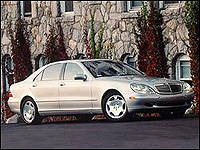 |
| Not to rain on GM's parade, but Mercedes-Benz previously launched its 1999 S500 with an optional cylinder deactivation system. (Photo: Mercedes-Benz) |
Not to rain on GM's parade but their new cylinder deactivation system won't ground breaking. Mercedes-Benz launched its 1999 S500 with an optional cylinder deactivation system. Ford has also got involved in the act, but with nothing in production yet, while Honda will be adopting the technology to smaller displacement power units - first in a 250-hp V6 that will shut down three cylinders to reduce fuel usage and overall emissions output.
It looks like cylinder deactivation has the potential to one day become as commonplace as electronic ignition. For now, only larger displacement 6, 8 and 12 cylinder vehicles will experience the fuel saving benefits, but there's no reason why a 4-cylinder vehicle couldn't improve efficiencies by running on 3 or even 2 cylinders.