





The FECV concept is visually identical to the Sportage, featuring production bumpers, cladding and wheels, although this
 |
| The FECV concept is visually identical to the Sportage, featuring production bumpers, cladding and wheels. (Photo: Kia Canada) |
Aside from releasing zero tailpipe emissions, the most remarkable thing about the Sportage FCEV is its parallel development to the gasoline and diesel powered Sportages. Kia has demonstrated that it can conduct simultaneous engineering ventures off a single vehicle architecture, which is an important step forward in the development of cost effective fuel cell vehicle production.
Due to the automaker's ability developing all versions of the Sportage simultaneously, the FCEV made its world debut alongside the conventional Sportage, demonstrating Kia's capability in adapting alternative power to ordinary production vehicles.
According to Kim Sang-Kwon, president of Research and Development for the Hyundai-Kia Automotive Group, the Sportage FCEV
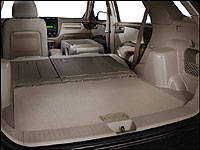 |
| Now that the automaker has a prototype, Kia will continue developing its fuel cell technology, with the final consumer product expected to debut by 2010. (Photo: Kia Canada) |
To Kia, the FCEV concept is a giant leap forward, but the Korean firm still has a fair deal of work left over for its engineers. As many of Kia's mass-production vehicles are smaller than the Sportage, the automaker is interested in developing a scaled down version of the system for suitable use in compact vehicles. As for now, Kia will continue on its path of developing a commercially viable zero-emissions vehicle based off of the technology seen here. The final product is expected to debut by 2010.