





That's in sharp contrast to the world's number one automaker, General Motors, which previously questioned the validity of hybrid gasoline-electric cars, concerned that they would only be an interim solution prior to zero-emission fuel-cell vehicles making them redundant.
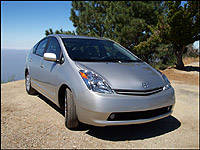 |
| Some automakers questioned the future of hybrid vehicles, believing them only to be a temporary and ultimately redundant solution once fuel-cell vehicles are released. (Photo: Trevor Hofmann, Canadian Auto Press) |
That may be a reasonably scenario, but while a limited number of fuel vehicles are now being produced by the major automakers and operated by the fleets of governments and some large corporations, two massive hurdles have yet to be decided upon, let alone overcome; first, refining hydrogen in a cost effective and clean process, and second, the delivery of hydrogen through an affordable and convenient infrastructure. Along with the obvious challenges that lay before the developers of the hydrogen economy, there remains the most important question as to just what organizations will pay for it all.
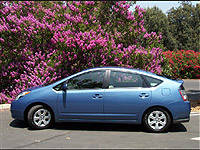 |
| A sure sign that people are ready for hybrids is the fact that Toyota could't keep up with the demand for the previous Prius. (Photo: Trevor Hofmann, Canadian Auto Press) |
Hybrid gas-electric vehicles make use of the current gasoline delivery infrastructure, and therefore don't require any change of habitual buying practices by the consumer, integrating seamlessly into the current economic fabric. While they aren't zero-emissions friendly, their reduced emissions and greatly reduced fuel consumption offer a legitimate step in the right direction.
The fact that Toyota, and partial hybrid manufacturer Honda, have not been able to keep up to the demand for their hybrid gas-electric vehicles, is a sure sign that they're on the right track. Besides, much of the technology that Toyota and Honda are developing in the real world with real customers, particularly battery and electric drive systems, will be necessary when integrating fuel cell applications.
This will give Toyota, and all hybrid gas-electric developers, a serious advantage over the competition that has decided to throw all of its research and development eggs into the fuel cell basket.