





Not only will a technological advantage be shared among hybrid producing automakers, but such companies will secure a goodwill advantage with the ever increasing green community, now becoming integrated into the mainstream. Green consumers will have adopted the brands that sell hybrid gas-electric vehicles more than a decade in advance of any fuel cell vehicle being available to them. When fuel cell technology becomes viable, no doubt many of these customers will continue with the brand they have developed a loyalty to.
 |
| Ford's first hybrid will be based on the popular Escape, and provide SUV versatility combined with the benefits of a hybrid powertrain. (Photo: Ford Motors) |
This concern has left automakers like Ford, which previously focused primarily on fuel cell development, scrambling to come to market with hybrid gasoline-electric alternatives. Fortunately for the number two manufacturer, the first hybrid off the line will be a compact SUV, based on the popular Escape. When it becomes available, expected late in 2004 as a 2005 model, green consumers with a need for the versatility of an SUV will without a doubt snap them up quickly.
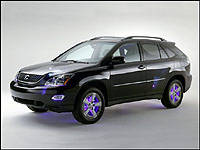 |
| Toyota's head start developing alternative engine technology and green marketshare, gives them a significant advantage in the forthcoming hydrogen economy over companies not playing the hybrid game. This Lexus RX Hybrid is the first of many current production cars to feature the hybrid upgrade. (Photo: Toyota) |
Toyota, mind you, may beat Ford to the punch, having already announced its Lexus RX Hybrid, with a hybrid gas-electric Highlander - the RX and Highlander share basic architecture - most likely not far behind. With both entry and premium SUVs in their lineup, the Japanese giant could gobble up market share before Ford even gets off the starting blocks.
On this subject Toyota has announced that it plans to incorporate hybrid technology into the majority of its cars and light trucks, as an alternative to gasoline-only power for the time being at least. The brand's clear lead in the alternative engine industry makes this bold statement feasible.
Looking at today's production, with Toyota rolling out one 2004 Prius per minute compared to one 1997 - 2003 Prius every 8 to 10 minutes, makes the brand's future prospects seem rosy indeed.