





Chrysler 300 Europe Bound in Plan to Boost Overseas Sales
While some automakers, such as Ford and Mitsubishi, are cutting back production, Chrysler is once again considering upping the volume of new LX vehicles being built at its Brampton, Ontario plant.
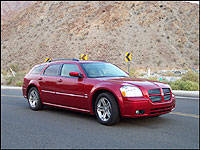 |
| Thanks to the success of the new LX vehicles, Chrysler is in the enviable position of upping the plant volumes at Brampton, Ontario. (Photo: Trevor Hofmann, Canadian Auto Press) |
DaimlerChrysler Canada has already increased production from one shift to two, but now in order to keep up with consumer demand a third shift is being considered.
While adding an additional shift might sound simple on the surface, it requires a great deal of forethought. The third shift means the plant would not have much, if any down time. Also, additional auto workers would need to be hired and trained. All could affect the quality of the end product, something the domestic automaker promises to rival Toyota and Honda in coming years.
 |
| Trevor Creed, Senior Vice President-Design (left), shows Dieter Zetsche, Chrysler Group President and CEO, (second from left) design details of the 300 sedan at the opening of "Inspired Chrysler Design: The Art of Driving" at the Walter P. Chrysler Museum on May 26, 2004, with retired Executive VP of Product Development and Design Tom Gale, and John Herlitz, retired Vice President of Product Design (far right) looking on. (Photo: DaimlerChrysler Canada) |
As reported in a Reuters news story, DaimlerChrysler VP of human resources M.J. Gendregske sent Canadian Auto Workers (CAW) union head Buzz Hargrove a letter on September 10th regarding the "the feasibility of a competitive third shift...", which without doubt was good news to for union.
Hargrove commented, "Our union is committed to working with DaimlerChrysler to resolve the issues which have been identified." He continued, "This is a great opportunity to create and maintain good jobs for our members and the community. It's important that government plays a role in supporting training and technology advancements needed to ensure a third shift at the Brampton plant."