





J.P.: Is one form of fuel saving vehicle more popular than the others?
B.O.: Toyota’s Synergy Drive hybrid technology is unique in this regard. No other deployment of advanced vehicle technology to reduce fuel consumption and emissions has met with such widespread market acceptance. Toyota simply has racked up more hybrid sales across more hybrid models than any other automaker.
J.P.: Automakers are building or planning to build more and more hybrids, plug-in hybrids, diesels and even hydrogen vehicles for the present and future. Are any of these technologies more or less promising than the others?
B.O.: Hybrid technology improves the overall operating efficiency of an automobile by reducing energy that is normally lost during braking and idling, and by powering some system components with electricity instead of mechanically.
Since hybrids do not require very large batteries to deliver significant fuel efficiency improvements, more and more models are likely to incorporate some degree of hybridization in order to reduce fuel consumption and emissions of carbon dioxide.
Plug-in hybrids represent a much more complex and potentially transformative proposition, since they will draw a portion of their operating energy from the electricity grid - in addition to the fuel stored in the tank.
Larger batteries will be needed, and this may make plug-in hybrids more expensive. Whether plug-in hybrid vehicles become widely used will depend on cost reductions in battery technologies and sufficient charging infrastructure.
Diesels are very promising since the technology is mature. As with hybrids, there is an incremental cost associated with this option-- but the fuel savings over the life of the vehicle will likely return value on the investment.
B.O.: Toyota’s Synergy Drive hybrid technology is unique in this regard. No other deployment of advanced vehicle technology to reduce fuel consumption and emissions has met with such widespread market acceptance. Toyota simply has racked up more hybrid sales across more hybrid models than any other automaker.
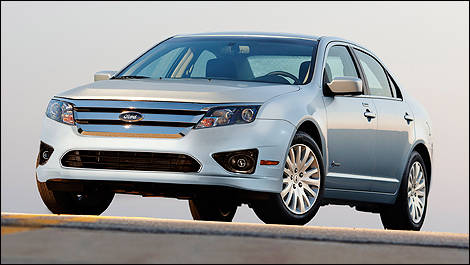 |
| 2010 Ford Fusion Hybride (Photo: Ford) |
J.P.: Automakers are building or planning to build more and more hybrids, plug-in hybrids, diesels and even hydrogen vehicles for the present and future. Are any of these technologies more or less promising than the others?
B.O.: Hybrid technology improves the overall operating efficiency of an automobile by reducing energy that is normally lost during braking and idling, and by powering some system components with electricity instead of mechanically.
Since hybrids do not require very large batteries to deliver significant fuel efficiency improvements, more and more models are likely to incorporate some degree of hybridization in order to reduce fuel consumption and emissions of carbon dioxide.
Plug-in hybrids represent a much more complex and potentially transformative proposition, since they will draw a portion of their operating energy from the electricity grid - in addition to the fuel stored in the tank.
Larger batteries will be needed, and this may make plug-in hybrids more expensive. Whether plug-in hybrid vehicles become widely used will depend on cost reductions in battery technologies and sufficient charging infrastructure.
Diesels are very promising since the technology is mature. As with hybrids, there is an incremental cost associated with this option-- but the fuel savings over the life of the vehicle will likely return value on the investment.
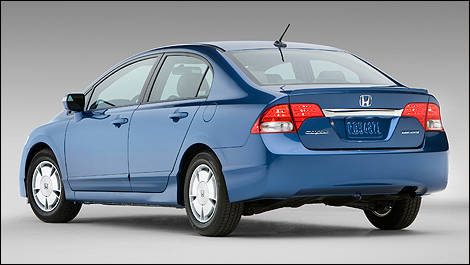 |
| 2010 Honda Civic Hybride (Photo: Honda) |