





My dreams of owning a Maserati would have to wait. Of course, as I got older I left the Biturbo behind and purchased a '60s quad-cam
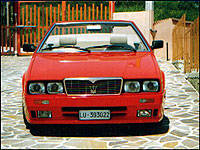 |
| No one was fooled as to the 1989 Spyder's heritage, nor the new 228 coupe or 430 sedan. Sure its edges were softened, grille slightly rounded, interior more refined and Biturbo name dropped, but under the hood it was still a Biturbo. (Photo: Maserati) |
Still, I'll always have a place in my heart for the boxy little Biturbo. It's a great little car as long as you stay away from pre-intercooler 1984 models, which suffered from unreliable turbos.
In case you were wondering Maserati never imported any Biturbos to North America in 1988, and 1989 cars were extremely updated with a larger displacement 2.8-liter V6, measuring 225 horsepower at 5,600 rpm and 246 lb-ft of torque. While they didn't equal the 250-horsepower version in Europe, the new cars were decidedly zippier than those previous, other than the 1985 E with its 260 lb-ft of torque.
Maserati kept the Spyder name, but renamed the coupe to 228 and 428 sedan to 430, dropping the Biturbo designation altogether. Still, the Italian brand might have changed the car's "handle", but no one was fooled as to its Biturbo heritage. Sure its edges were softened, grille slightly rounded and interior more refined, but it was merely an evolutionary
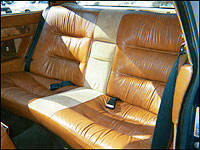 |
| It's a great little car as long as you stay away from pre-intercooler 1984 models, which suffered from unreliable turbos. (Photo: Maserati) |
Well, identical except for the coupe's longer wheelbase, plus the upgraded suspension system and standard ventilated disc brakes with floating calipers, "Ranger" limited slip differential, dual exhaust, and larger 15-inch 5-bolt alloy wheels that came on all models.
A 4-speed automatic transmission once again became optional and automatic climate control was added to increase interior comfort, while less noticeably a copper radiator replaced the aluminum one, and engine intake valves modified to measure the exact same size.