





The interior is, I dare say, even more radical than the exterior. It seems to be an exercise in streamlining. Visually it amounts to large uncluttered surfaces, particularly the dash and seats. The need for accessory controls seems to have been alleviated by the round Borg-style interface in the
middle of the dash, taking the wow factor of the MX-Crossport concept's display module and bumping it up a notch. The said interface port is crucial in programming the cars hard disc drive, which will no doubt store movies, songs, games and other programs for taking over the world.
The streamlining is largely the result of Mazda's designers applying the "Shoji" principle, which involves nestling the hidden, practical features under a clean, decorative yet suggestive façade. Shoji screens are thin Japanese rice paper dividers and doors that allow silhouettes of images behind to shadow through without detail, as seen in such movies as Austin Powers: International Man of Mystery, though I doubt that's what Mazda engineers were envisioning when they conceived the idea.
Gone is the conventional shifter in favour of a low-mounted housing that allows you to dock your very own USB stick, which serves as a key.
Perhaps there is no need for a shifter considering the large Formula-1 style paddle shifters behind the steering wheel indicating a sequential manual automatic.
The seats look like a hard-shell molded plastic covered with super memory foam in a baby-teal colour that matches the lower dash. The doors and others panels are picked out in darker blue-green tones with bits and strips of satiny aluminum and some more of the mysterious shaded plastic rounding out the Seaquest DSV interior. Other features get highlighted by a trick lighting system that illuminates and highlights objects in use while somewhat concealing them when dimmed. Shoji that!
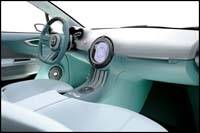 |
| The need for accessory controls seems to have been alleviated by the round Borg-style interface in the middle of the dash. (Photo: Mazda Canada) |
The streamlining is largely the result of Mazda's designers applying the "Shoji" principle, which involves nestling the hidden, practical features under a clean, decorative yet suggestive façade. Shoji screens are thin Japanese rice paper dividers and doors that allow silhouettes of images behind to shadow through without detail, as seen in such movies as Austin Powers: International Man of Mystery, though I doubt that's what Mazda engineers were envisioning when they conceived the idea.
Gone is the conventional shifter in favour of a low-mounted housing that allows you to dock your very own USB stick, which serves as a key.
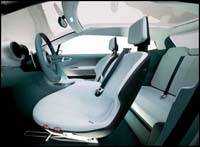 |
| The seats look like hard-shell molded plastic covered with super memory foam in a baby-teal colour that matches the lower dash. (Photo: Mazda Canada) |
The seats look like a hard-shell molded plastic covered with super memory foam in a baby-teal colour that matches the lower dash. The doors and others panels are picked out in darker blue-green tones with bits and strips of satiny aluminum and some more of the mysterious shaded plastic rounding out the Seaquest DSV interior. Other features get highlighted by a trick lighting system that illuminates and highlights objects in use while somewhat concealing them when dimmed. Shoji that!