The handling and overall stability of the Matrix was great. It is such a smooth-riding 5-door wagon. To enhance the
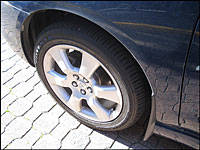 |
| The optional P215/50R17 all season tires with 17-inch aluminum alloy wheels were funky yet functional. (Photo: Alexandra Straub, Canadian Auto Press) |
Matrix's stability, its body was created using computer-aided design and engineering to maximize safety and minimize noise, vibration and harshness. It handled corners very well and was very stable at highway speeds. In addition, my temporary Toyota came with a nice set of funky yet functional tires and wheels; the optional P215/50R17 all season tires with 17-inch aluminum alloy wheels. This option is found in the "B" Package (an extra $2,100) which also includes a power moonroof, fog lamps, tire pressure monitoring system and ABS brakes. The all-season rubber held firm to both dry and wet pavement for optimal performance.
I felt the braking system would have been better if it had rear disc brakes in place of the rear drums. While stopping the car was an efficient process due to the anti-lock
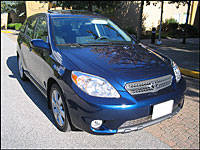 |
| The Matrix has a fuel economy rating of 8.2 L/100 km in the city and 6.3 L/100 km on the highway. (Photo: Alexandra Straub, Canadian Auto Press) |
braking system, I'm sure rear discs would have proved better. Nevertheless, the brakes do the job. Fuel economy was once again fantastic. Throughout my test week I drove around city streets and on the highway, putting about 450 km on the odometer and still had 7/8ths of a tank left. I tried to remember if I had topped up the tank when the gas prices were less than 93.3 cents per liter, but I didn't. The Matrix just kept on going. At the end of the week it only cost me $32.00 to fill up (at 81.9 cents per liter), and I was thrilled. Now I can get that extra pair of shoes I have always wanted because I saved so much on gas that week. OK, I'm kidding, but it does make a difference. Bottom line, the Matrix has a
fuel economy rating of 8.2 L/100 km in the city and 6.3 L/100 km on the highway.