





Did you hear me say the new 3 was larger? Well it is, quite a bit. For those obsessed with dimensional specifications, the new
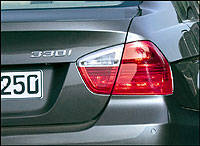 |
| Not only is the new 3.0-liter engine 30 horsepower more engaging than the outgoing iteration, but it is also 30 percent lighter due to extensive use of magnesium. (Photo: BMW Canada) |
Continuing on with the engine, not only is the new 3.0-liter engine 30 horsepower more engaging than the outgoing iteration, but it is also 30 percent lighter due to extensive use of magnesium, the first large-scale production engine to use the lightweight metal for engine applications. Magnesium, which is not coincidentally 30 percent lighter than aluminum, is used in the crankcase, crankshaft bearings and cylinder head cover.
Now that we're talking about industry firsts, the new 3.0-liter is the first 6-cylinder to use the brand's Valvetronic variable valve lift system. It replaces the traditional throttle butterfly, enhancing throttle response and reportedly, reducing fuel consumption. What does that mean in real numbers? Horsepower increases by 13 percent via this technology alone, while fuel efficiency improves by 12 percent. BMW's double-VANOS variable valve timing for the
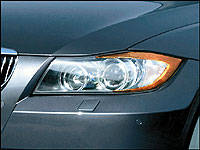 |
| The new 3.0-liter is the first 6-cylinder to use Valvetronic variable valve lift system. (Photo: BMW Canada) |
The 2.5- and 3.0-liter engines both come joined to a standard 6-speed manual transmission, unless that is, a 6-speed Steptronic manually-actuated automatic has been ordered. Up until 2006 a 5-speed manual-mode automatic will be the optional choice, while base 325i models continue on with a 5-speed manual. There's no change for manual-equipped 3-liter cars, already using 6-speed manuals. For 2004 3.0-liter rear-wheel drive cars a 6-speed SMG, or sequential manual gearbox has been offered. BMW makes no mention of the SMG's availability in the 2006 model, but it most likely will be part of the options list.