





Differentiating the Hybrid
Another aspect that Hyundai felt it could improve upon, compared to the competition, is make the hybrid model more visually distinctive within its stable-mates.
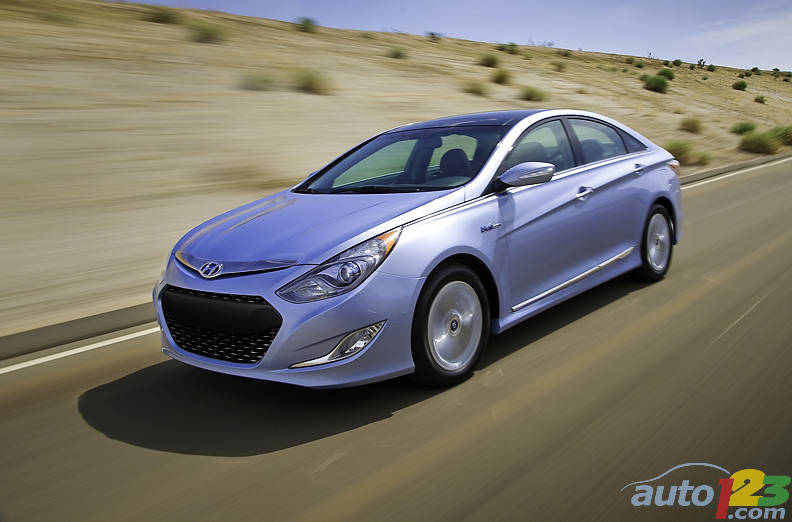
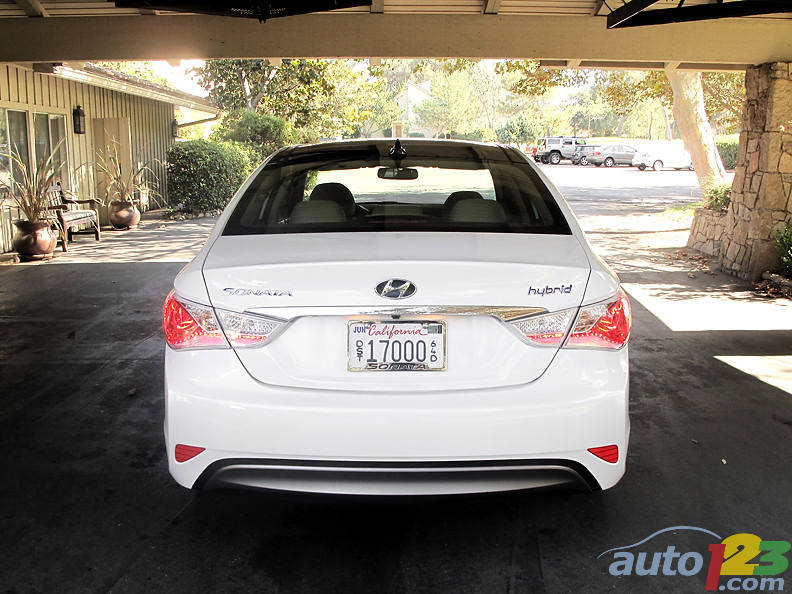
On the exterior you’ll find pieces designed to lower aerodynamics and make the vehicle look more high-techy, such as new front fascia, LED daytime running lights and taillights, a “squared off” rear section, and requisite Hybrid and Blue Drive badging.
The hybrid has an impressive coefficient of drag factor of .28, which gets lowered to an even more impressive .25, by the Active Air Flap; it closes an opening in the lower grille area, whenever the engine doesn’t need maximum cooling.
Hybrid models are also fitted with low-resistance tires.
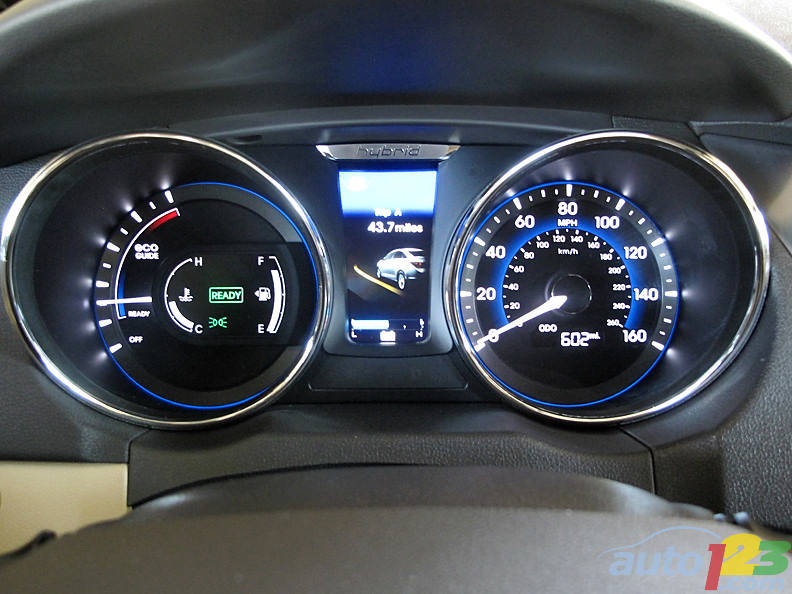
Inside you'll find the aforementioned new IP cluster, more brushed aluminum trim, optional panoramic sunroof, and a hybrid technology display for the optional navigation system.
High End Package
While prices will only be announced closer to the Canadian launch date, (which is actually a fair way off in January), Hyundai executives said to expect a starting price somewhere in the low thirties.
That puts the Hybrid at the top end of the Sonata food chain, even above the just announced Turbo models. Like the Turbo models, Hybrid will be available in only two, high-equipped models: Hybrid and Hybrid Limited with Nav. In addition to the nav system, the latter model also throws on rear backup camera, leather seats, heated rear seats and 17-inch wheels.
Niche Future?
How many of these wonders of technology and fuel efficiency does Hyundai expect to sell each calendar? How about 300 to 500.
Seems like a small number, but it corresponds to how hybrids variants have fared in the overall midsize segment.
Currently Camry, Fusion, Malibu, and Altima, are all available with hybrid versions, where they comprise only three per cent of overall midsize sales. (Four-cylinder midsizers dominate with a 71 percent share, while six-cylinder midsizers account for the remaining 26 percent).
The line on why they remain a niche product is that fuel prices are still too low — that consumers are making calculations on how a hybrid’s higher initial costs will be offset by a hybrid's lower fuel consumption over an expected period of ownership.
While lots of buyers seem always willing to pay a premium for style, power, luxury, brand, etc., there seems to be no “mass” willingness to pony up for the ability to make a smaller carbon footprint. At least not yet.
Another aspect that Hyundai felt it could improve upon, compared to the competition, is make the hybrid model more visually distinctive within its stable-mates.
On the exterior you’ll find pieces designed to lower aerodynamics and make the vehicle look more high-techy, such as new front fascia, LED daytime running lights and taillights, a “squared off” rear section, and requisite Hybrid and Blue Drive badging.
The hybrid has an impressive coefficient of drag factor of .28, which gets lowered to an even more impressive .25, by the Active Air Flap; it closes an opening in the lower grille area, whenever the engine doesn’t need maximum cooling.
Hybrid models are also fitted with low-resistance tires.
Inside you'll find the aforementioned new IP cluster, more brushed aluminum trim, optional panoramic sunroof, and a hybrid technology display for the optional navigation system.
High End Package
While prices will only be announced closer to the Canadian launch date, (which is actually a fair way off in January), Hyundai executives said to expect a starting price somewhere in the low thirties.
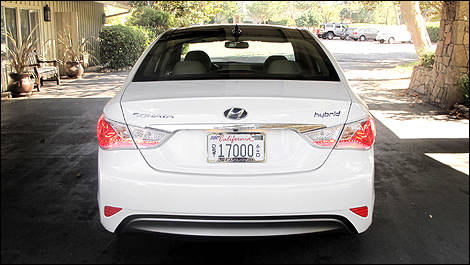 |
| Like the Turbo models, Hybrid will be available in only two, high-equipped models: Hybrid and Hybrid Limited with Nav. (Photo: Mike Goetz/Auto123.com) |
That puts the Hybrid at the top end of the Sonata food chain, even above the just announced Turbo models. Like the Turbo models, Hybrid will be available in only two, high-equipped models: Hybrid and Hybrid Limited with Nav. In addition to the nav system, the latter model also throws on rear backup camera, leather seats, heated rear seats and 17-inch wheels.
Niche Future?
How many of these wonders of technology and fuel efficiency does Hyundai expect to sell each calendar? How about 300 to 500.
Seems like a small number, but it corresponds to how hybrids variants have fared in the overall midsize segment.
Currently Camry, Fusion, Malibu, and Altima, are all available with hybrid versions, where they comprise only three per cent of overall midsize sales. (Four-cylinder midsizers dominate with a 71 percent share, while six-cylinder midsizers account for the remaining 26 percent).
The line on why they remain a niche product is that fuel prices are still too low — that consumers are making calculations on how a hybrid’s higher initial costs will be offset by a hybrid's lower fuel consumption over an expected period of ownership.
While lots of buyers seem always willing to pay a premium for style, power, luxury, brand, etc., there seems to be no “mass” willingness to pony up for the ability to make a smaller carbon footprint. At least not yet.
Article Gallery