


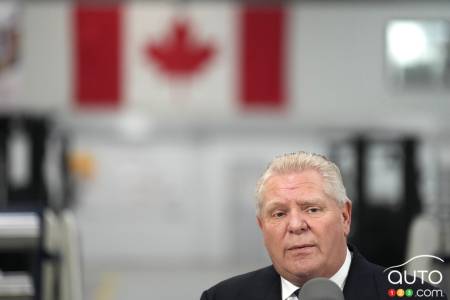



Ontario Premier Doug Ford was quick to react to U.S. President Donald Trump's announcement confirming 25-percent tariffs to be imposed on vehicles entering the United States, as well as individual components that cross the border to serve the assembly of models in the U.S. The tariffs are set to take effect next week on April 2nd, barring any more last-minute postponements.
Update: Premier Doug Ford's office confirmed on Thursday that U.S. authorities are indicating there could be an appeasement of the auto tariffs. More details to come.
Premier Ford stated that his government intended to “inflict as much pain as possible to the American people without inflicting pain on the Canadian population” in retaliation for the tariffs.
Ontario is the most affected province in Canada. Five manufacturers operate eight assembly plants on its territory, in addition to several plants that manufacture engines and transmissions.
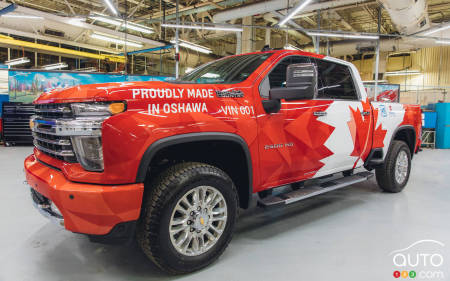
And as mentioned, the tariffs will apply not only to vehicles crossing the border, but also to individual components such as engines and transmissions. As a result, even many if not most models built in the U.S. will be affected by the tariffs.
A number of details will need to be clarified, however, because as Automotive News reports, parts that comply with the rules of the current U.S.-Mexico-Canada free trade agreement will remain exempt from duties until the Commerce Department “establishes a procedure to apply duties to their non-U.S. content”.
Ford, for example, is likely to be penalized for the engines it manufactures in Windsor, Ontario for its Super Duty pickup truck and for its Mustang. General Motors (GM) manufactures transmissions in St. Catharines, while Honda assembles engines at its Alliston plant. Those models that use these components will see their prices increase.
And as Automotive News also reports, the president of Local 200 of the Canadian Auto Workers union (Unifor), John D'Agnolo, estimates that each truck carrying a full load of engines will pay $75,000 USD in duties under the 25-percent tariff when crossing the border. A full trailer contains 45 engines for the Ford Super Duty or 66 5.0L V8 engines for the Mustang. They are destined for assembly in Ford factories in Kentucky, Michigan and Ohio. Together, those factories employ 20,000 workers.
It is clear that jobs are at stake, both in Canada and in the U.S.
Here is what Doug Ford said on the X platform, regarding Donald Trump's 25 percent duties:
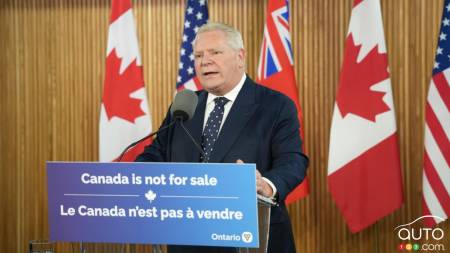
“His 25 per cent tariffs on cars and light trucks will do nothing more than increase costs for hard-working American families. U.S. markets are already on the decline as the president causes more chaos and uncertainty. He’s putting American jobs at risk. I’ve spoken with Prime Minister Carney. We agree Canada needs to stand firm, strong and united. I fully support the federal government preparing retaliatory tariffs to show that we’ll never back down.”
- Ontario Premier Doug Ford
The specifics of Ontario’s response remain to be announced. For his part, Canadian Prime Minister Mark Carney declared before the announcement of the tariffs that he would set up a $2 billion strategic intervention fund to help the Canadian auto industry and strengthen a supply chain threatened by U.S. tariffs. No details have been shared about that plan.
A pan-Canadian network
However, Carney promised that if elected on April 28th, his government will try to build a fully Canadian network for auto parts, working with the industry to manufacture more parts in the country and limit the number of components that must cross to the U.S. during production.
Other reactions are expected.