


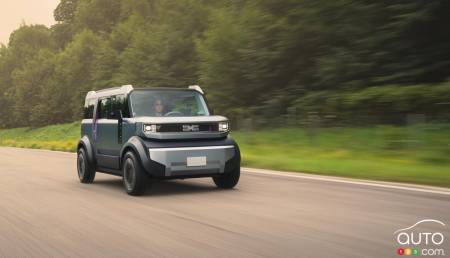



Facing the rise of Chinese manufacturers, the European Union is working to create a new class of urban electric vehicles, tentatively named "E car." The objective is to reduce the price of new small cars by relaxing certain technical requirements, while maintaining a level of safety superior to current micro-vehicles.
This new category is expected to be defined over the next two years and is directly aimed at protecting the competitiveness of European manufacturers in their own market.
Rules inspired by Japanese kei cars
The E car concept strongly resembles that of Japanese kei cars, these mini-vehicles subject to strict limits on size and power. The EU would thus consider imposing caps on size and performance to determine which models can be homologated in this new category.
This debate arises as, on the other side of the Atlantic, U.S. President Trump recently expressed interest in legalizing kei cars in the U.S.
Fewer electronics, but no compromise on structure
To get to the more affordable price points, future E cars would retain a rigid structure and undergo all the crash tests other vehicles do. But several electronic aids could disappear, for example autonomous emergency braking, fatigue or inattention detection and lane keeping assist.
That kind of paring down would allow the price of city cars to be reduced by 10 to 20 percent, while ensuring they remain significantly safer than current micro-vehicles.
Tax exemptions to attract buyers
To make these models even more attractive, the EU is also considering targeted tax exemptions to entice urban buyers otherwise tempted to go for low-priced imported models. The target price point mentioned by several European sources is below the €15,000 mark before subsidies, or around $17,600 USD, considered a threshold for making EVs widely accessible in cities.
Which models could qualify?
Existing models like the Renault 5 E-Tech or the future electric Twingo could theoretically fall into the E car category, though their dimensions are likely to be too large to be eligible.
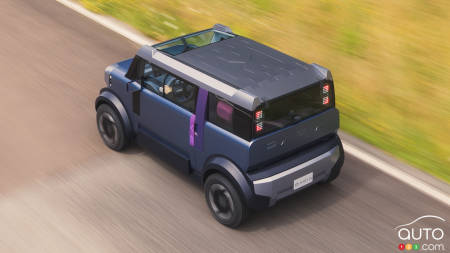
A concept like the Dacia Hipster. However. seems to fit the spirit of the project perfectly. This model, 3 meters long and 1.55 meters wide, can accommodate four occupants and reach a maximum speed of 90 km/h. It weighs a mere 800 kg.
Dacia estimates that such a vehicle could be sold for under €15,000, while being ideally suited for urban use.

A risky gamble in the fight against Chinese manufacturers
If the intention is to curb the expansion of Chinese brands, the plan has an obvious flaw: the same rules will also apply to them. BYD, already very active in Europe, could easily adapt its Seagull (Dolphin Surf) or develop a specific model for this category.
It should be noted that BYD is already the first non-Japanese manufacturer to have developed a kei car, proof of its regulatory adaptability. Even with import duties sometimes reaching 45 percent, Chinese brands remain extremely competitive on price.
North American perspective: a pragmatic approach
This European initiative implicitly recognizes a reality that also applies, with differences, in North America: electrification cannot rely solely on expensive vehicles packed with tech. Success will also depend on vehicles that are simple, lightweight and suitable for urban uses.