


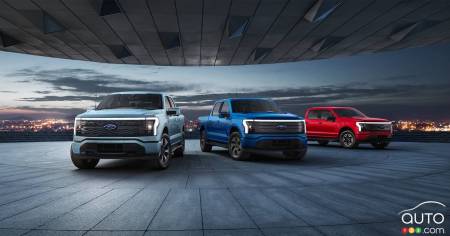



Ford is officially dropping the F-150 Lightning in its current form. Rumours of the pending demise of the all-electric pickup had been circulating for several weeks, especially after the automaker suspended production of the F-150 Lightning production earlier this fall.
The decision is part of a pivot in strategy for Ford, which plans to further develop hybrid technology and offer higher-efficiency gasoline engines. It’s similar to what we’re hearing from a number of carmakers, and it comes in response to a) slower growth in EV adoption in the U.S. and b) U.S. government policies that have been overtly hostile of electric mobility.
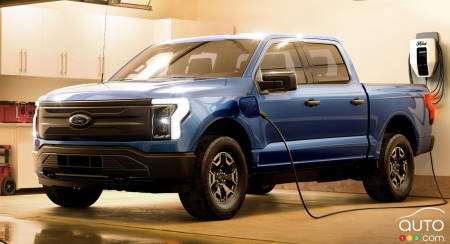
Enter the Ford F-150 Lightning EREV
Ford is starting from scratch regarding its next-generation electrified pickup. The manufacturer had been working on a follow-up to the Lightning. That electric pickup project, codenamed T3, has now been completely put aside.
Instead, Ford will focus its energy and efforts on a new model. The F-150 Lightning EREV promises a total range of over 1,126 km thanks to a range extender. In that system, a gasoline engine work in support of electric technology that actually turns the vehicle’s wheels. This formula is similar to the one put forward by Stellantis with the future Ram 1500 REV (formerly called Ramcharger).
"Our next-generation F-150 Lightning EREV will be just as revolutionary [as the F-150 Lightning]. It offers everything Lightning customers love—near-instant torque and 100% electric driving. But thanks to a high-power generator allowing an estimated range of over 700 miles, it tows like a locomotive. Heavy towing and long transcontinental trips will become as simple as daily commuting."
— Doug Field, Chief EV, Digital and Design Officer at Ford.
Changes are also expected concerning the next generation of Ford's utility van. We know that the manufacturer currently offers the gasoline-powered Transit in addition to the all-electric E-Transit model. It could eventually receive hybrid technology.
Ford also said it’s aiming for half of its sales to consist of hybrid vehicles, extended-range EVs (EREVs) and full-on EVs. Currently, those make up 17 percent of the company’s sales.