





Japanese media has picked up on the story too, with daily Asahi Shimbun commenting recently, "The decline of the once invincible
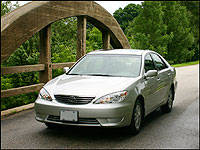 |
| The need for cooperation goes beyond Honda and Toyota's welfare, in that the U.S. is Japan's most significant political and military ally. (Photo: Trevor Hofmann, Canadian Auto Press) |
The need for cooperation goes beyond Honda and Toyota's welfare, mind you, in that the U.S. is Japan's most significant political and military ally. The fact that protectionist U.S. politicians, backed by powerful lobby groups, have threatened to disrupt the flow of Japanese auto imports in the past weighs heavy on the Japanese government and auto execs, making the need to address alleged unfair trade practices on one side of the Pacific, and the potential of anti-Japanese sentiments in America.
It is important to note, however, that despite the claim by some groups that Japan is unfair in its trade policies, the Big 3 make few vehicles suitable for Japanese consumption. Not only have perceived quality
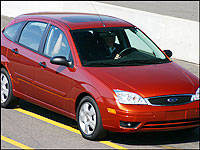 |
| By Detroit's own admission, most domestic cars don't measure up to their Asian counterparts. (Photo: Trevor Hofmann, Canadian Auto Press) |
Truly, by Detroit's own admission, most domestic cars don't measure up to their Asian counterparts. Significant strides have been made with regards to reliability and other areas of quality control, but it will be a hard sell to turn around perceptions among North American consumers, taking time and also a great deal of ad money to get the message out.