


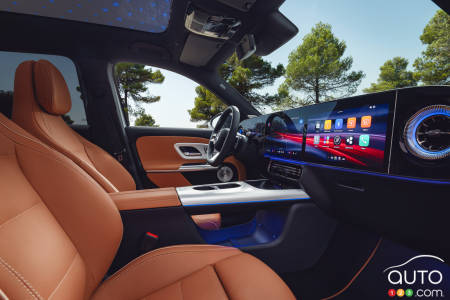



When it comes to recurring complaints we receive from vehicle owners and motorists in our day-to-day, the one about the absence of physical buttons in newer models is perhaps the most recurrent.
Several automakers have shown they’ve been listening to the feedback as well; certain basic commands, namely to do with the A/C and audio, are now accessible via a good old button in just about every new vehicle.
Mercedes-Benz was one of the first and most enthusiastic adopters of big, advanced screens, which naturally pulled all sorts of commands into its digital menus. But now even the automaker behind the 142-cm (56-inch) MBUX Hyperscreen admits it was too zealous in removing physical buttons.
Speaking to Autocar, Mercedes-Benz CEO Ola Källenius acknowledged that the automaker, and the automotive industry as a whole, went too far in eliminating tactile controls, dials and switches.
"Sometimes you get a bit ahead of yourself and do technology for the sake of technology and maybe forget a little bit about the customer,” Källenius conceded, adding that Mercedes-Benz spent “countless hours” developing user interfaces to ensure ease of use. “From now on, you will see us reintroduce the most sensible buttons.”
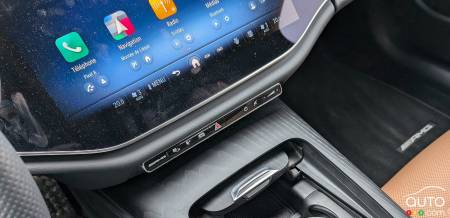
The admission aligns with a growing backlash from consumers, automotive hacks like us and safety advocates alike. Testing organizations like Euro NCAP have begun penalizing vehicles that force drivers to navigate multiple touchscreen sub-menus for basic driving functions, which inevitably draws eyes off the road.
That’s one reason several automakers, including Hyundai, Volkswagen and Porsche, have started course-correcting back toward physical switchgear.
Källenius promised a return to “sensible” analog controls, for instance a physical volume knob instead of the touch sliders found on the new CLA steering wheel. But the word sensible obviously leaves wiggle room; drivers shouldn't expect a complete retreat to retro interiors. Mercedes-Benz’s massive pillar-to-pillar screens are central to its interior design language, and the brand continues to invest heavily in advanced natural voice control systems.
In other words, the tech arms race between automakers, particularly in the luxury sector, rages on.
Still, this week’s acknowledgement by Mercedes marks an important pivot for the carmaker. By recognizing that high-tech minimalism cannot entirely replace the instant, eyes-free practicality of a physical button, Mercedes-Benz is a) listening to its customers, and b) heeding the warnings of governments ready to impose penalties.
