





Toyota Prius Selling Four Times Faster than Expected
Last Thursday, Toyota Motor Corp. exposed the production facility for its gasoline-electric hybrid vehicles to journalists, the first time the Japanese automaker has ever done so.
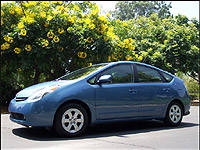 |
| The second-generation Toyota Prius is improved in every way, and surprisingly costs the same as the previous model. (Photo: Trevor Hofmann, Canadian Auto Press) |
During the event Kenji Takahara, head of administration at neighboring Tsusumi plant, stated that while hybrid technology might cost more to manufacture currently, "they don't have to be expensive to make".
Toyota has taken a giant leap forward with its second-generation Prius hybrid gasoline-electric; it's larger, faster, better handling, offers improved fuel economy and reduces harmful emissions over the previous benchmark Prius launched in late 1997, all the while costing the consumer the same price as the outgoing model.
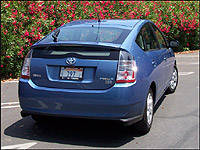 |
| Hybrid construction is no longer a laboriously exclusive process, with the Prius now using the same assembly line as four other conventional Toyota models. (Photo: Trevor Hofmann, Canadian Auto Press) |
But it's not only in the end product where the changes from old to new are significant, the build process has also improved. "We used to build the previous Prius on an exclusive assembly line at the Takaoka plant, and later at Motomachi," said Takahara. "Now, it shares a line with four other mass-production sedans," he added.
This manufacturer process breakthrough might be more important to reducing the cost of alternative automotive power in the long run, than even the enhancements to the car itself. After all, Toyota has grand plans to sell up to 300,000 hybrid gas-electric vehicles starting in 2005/2006.