





Cell phones, PDA's, MP3 players and that hot cup of Tim's in the cup holder are all items which can pose hazards while driving- if drivers choose to use them. Today's youth are more distracted while behind the wheel than ever before by electronics, and many do not practice safe driving- choosing to talk, change CD's or even send text messages while on the road. These young, inexperienced drivers are a concern, though driver distraction is a problem that crosses boundaries of age, gender and experience.
To help educate on the problem and promote safe driving, the Insurance Bureau of Canada has helped with a recent initiative to create the D.U.M.B. car- a machine intended to deliver a serious message in an entertaining way. The unique car will be featured at community outreach events and other presentations. Trained university students use the exhibit to show motorists of all ages the dangers of distracted driving in a simulated setting.
D.U.M.B., in this case, stands for Distractions Undermining Motorists Behavior.
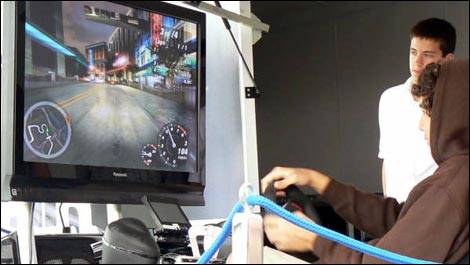
In effect, it's a video game driving simulator with a seat and mock-up of a vehicle's cabin. A seat, steering wheel, pedals and dashboard come together, complete with all the distractions drivers may face behind the wheel. The D.U.M.B. car experience begins with a few blocks of un-distracted driving simulation before drivers face incoming text messages, snacking, phone calls or requests to turn up the volume of the stereo system or change the CD.
Usually, any one of these distractions prompts the driver to focus away from the simulation long enough to crash into a guardrail, a building, or the front of a large transport truck. This is sobering enough- especially given that drivers often try to tackle multiple distractions at once.
This is likely why, in 8 crashes out of 10, distracted driving plays a role. It isn't only high-tech electronic distractions that are dangerous either- as studies have placed eating, drinking, or even grooming behind the wheel in the same category as texting, consulting a PDA or talking on the cell phone- hands-free or not.
In fact, two separate studies have shown that drivers on cellular phones are four times more likely to crash than those who don't chat and drive.
photo:Justin Pritchard
 |
To help educate on the problem and promote safe driving, the Insurance Bureau of Canada has helped with a recent initiative to create the D.U.M.B. car- a machine intended to deliver a serious message in an entertaining way. The unique car will be featured at community outreach events and other presentations. Trained university students use the exhibit to show motorists of all ages the dangers of distracted driving in a simulated setting.
D.U.M.B., in this case, stands for Distractions Undermining Motorists Behavior.
In effect, it's a video game driving simulator with a seat and mock-up of a vehicle's cabin. A seat, steering wheel, pedals and dashboard come together, complete with all the distractions drivers may face behind the wheel. The D.U.M.B. car experience begins with a few blocks of un-distracted driving simulation before drivers face incoming text messages, snacking, phone calls or requests to turn up the volume of the stereo system or change the CD.
Usually, any one of these distractions prompts the driver to focus away from the simulation long enough to crash into a guardrail, a building, or the front of a large transport truck. This is sobering enough- especially given that drivers often try to tackle multiple distractions at once.
This is likely why, in 8 crashes out of 10, distracted driving plays a role. It isn't only high-tech electronic distractions that are dangerous either- as studies have placed eating, drinking, or even grooming behind the wheel in the same category as texting, consulting a PDA or talking on the cell phone- hands-free or not.
In fact, two separate studies have shown that drivers on cellular phones are four times more likely to crash than those who don't chat and drive.
photo:Justin Pritchard