





We'll probably get another half-dozen snow storms between now and May, but it’s safe to say that winter’s gone!
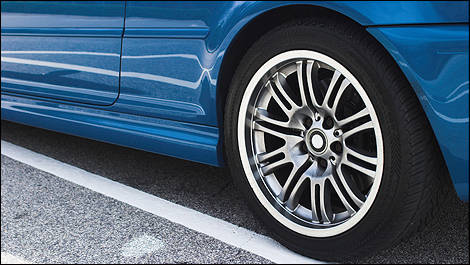
For most Canadians, it's time to look into putting away those annoyingly noisy and plain ugly looking winter rubbers. So, without any further ado, let's talk about summer tires. We will begin by looking into what types of tires are suitable for the warmer spring, summer and fall seasons.
These circular-shaped, rubber-made items are commonly referred to as 4-season and summer tires. A 4-season tire is expected to perform well in all road conditions. If we break it down, there are 2 kinds of four-season tires. The first is dubbed Touring all-season. It is a softer tire that is principally designed to last a long time and that can be used on wet, dry and snow-covered road surfaces. The other type of all-season tires is commonly referred to as Performance all-season or a 3-season tire. By comparison to the first, they have a harder rubber compound that is less flexible and that will become utterly useless near or at the freezing point. The fact remains that no four-season tire will ever be able to provide as much grip in cold conditions as does a pure winter tire.
A summer or performance tire can perform well in both wet and dry conditions. Most of these tires are characterized by very stiff sidewalls which endow them with better cornering abilities and crisper handling. A performance tire will not work in cold weather because their compound is designed to work at higher temperatures. Compared to the 4-season tires, they will also wear out faster because they are intended to be stickier.
What principally defines a good 4-season tire is its ability for good water evacuation. A unidirectional tire is capable of displacing up to 30% more water than regular non-directional tires. Obviously, dry traction cannot be overlooked. A solid ban of rubber down the middle of the tire will help improve highway stability. Some tires have aggressive shoulders; they will be noisier but stability will be further enhanced. A softer sidewall will not transmit as many road imperfections however they will tend to flex more when turning hard or taking a curve. In the end, the remainder of the tire characteristics are up to the buyer based on what they expect from those that they plan on purchasing.
The best tire tip ever
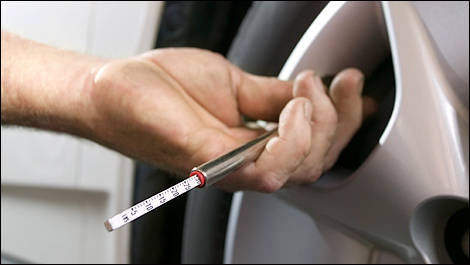
The best thing to do is still to have two good sets of tires, one winter and one summer. By doing so, you will not only maximize the life of your tires, you will also benefit from maximum traction in just about every condition. And lastly, try and keep an eye on your tire pressures; checking it as little as once a month can prevent blowouts, excessive wear and even increased fuel consumption.
For most Canadians, it's time to look into putting away those annoyingly noisy and plain ugly looking winter rubbers. So, without any further ado, let's talk about summer tires. We will begin by looking into what types of tires are suitable for the warmer spring, summer and fall seasons.
 |
These circular-shaped, rubber-made items are commonly referred to as 4-season and summer tires. A 4-season tire is expected to perform well in all road conditions. If we break it down, there are 2 kinds of four-season tires. The first is dubbed Touring all-season. It is a softer tire that is principally designed to last a long time and that can be used on wet, dry and snow-covered road surfaces. The other type of all-season tires is commonly referred to as Performance all-season or a 3-season tire. By comparison to the first, they have a harder rubber compound that is less flexible and that will become utterly useless near or at the freezing point. The fact remains that no four-season tire will ever be able to provide as much grip in cold conditions as does a pure winter tire.
A summer or performance tire can perform well in both wet and dry conditions. Most of these tires are characterized by very stiff sidewalls which endow them with better cornering abilities and crisper handling. A performance tire will not work in cold weather because their compound is designed to work at higher temperatures. Compared to the 4-season tires, they will also wear out faster because they are intended to be stickier.
What principally defines a good 4-season tire is its ability for good water evacuation. A unidirectional tire is capable of displacing up to 30% more water than regular non-directional tires. Obviously, dry traction cannot be overlooked. A solid ban of rubber down the middle of the tire will help improve highway stability. Some tires have aggressive shoulders; they will be noisier but stability will be further enhanced. A softer sidewall will not transmit as many road imperfections however they will tend to flex more when turning hard or taking a curve. In the end, the remainder of the tire characteristics are up to the buyer based on what they expect from those that they plan on purchasing.
The best tire tip ever
The best thing to do is still to have two good sets of tires, one winter and one summer. By doing so, you will not only maximize the life of your tires, you will also benefit from maximum traction in just about every condition. And lastly, try and keep an eye on your tire pressures; checking it as little as once a month can prevent blowouts, excessive wear and even increased fuel consumption.
 |