

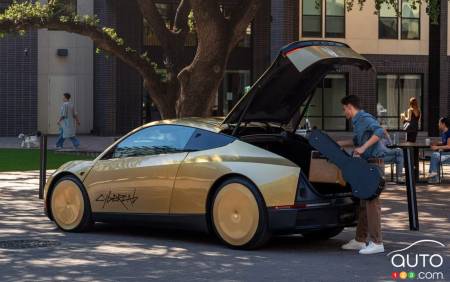
Tesla has begun offering rides in its Cybercab in select areas of Austin, Texas. The two-seat electric vehicle has neither a steering wheel nor pedals and was designed specifically for autonomous passenger transport.
Given the EV maker’s checkered history with autonomous vehicles to date, you won’t be surprised to learn that the introduction of the Cybercabs is being closely watched by the National Highway Traffic Safety Administration (NHTSA). And the agency doing more than just watching - according to Agence France-Presse (AFP), the NHTSA has opened an inquiry to examine the technical data and the process Tesla used to certify the vehicle.
A limited rollout for now
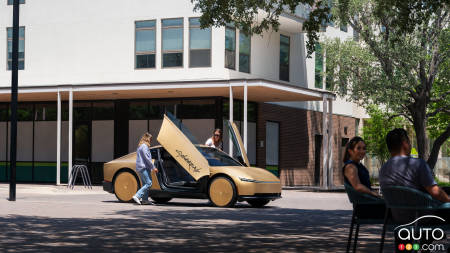
The Cybercab is thus now integrated into Tesla’s existing robotaxi service in Austin. Users can choose between it and a Model Y, which offers more room for passengers.
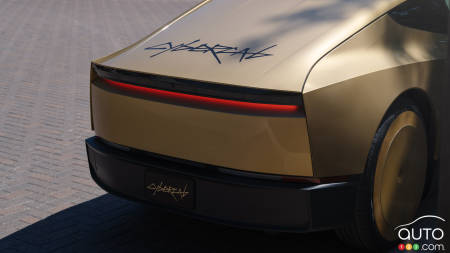
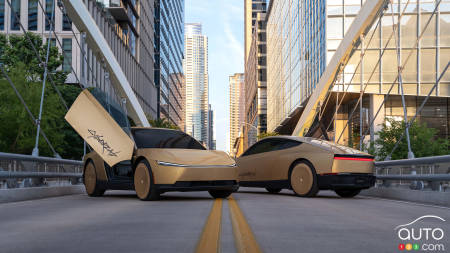
The vehicle is recognizable by its gold finish but also by its butterfly doors. It can seat only one or two occupants, and Tesla indicates that rides are offered within a limited perimeter. The company is also not specifying when regular pricing will be introduced. Executives have nevertheless raised the idea of a dynamic pricing model, with fares fluctuating based on demand.
According to Reuters, 420 autonomous Tesla vehicles were registered in Texas as of September 2, including 45 Cybercabs. By comparison, Waymo has 988 registered vehicles in the state.
Tesla has been operating a limited robotaxi service since June 2025. Until now, it relied primarily on Model Y vehicles equipped with the automaker’s full self-driving system. The service has since expanded to a few other cities in Texas and Florida.
Regulatory obstacles
The arrival of the Cybercab raises questions, as U.S. federal standards generally require the presence of a steering wheel and pedals for vehicles intended for commercial operation. An exemption can be granted, but Tesla reportedly did not apply for one, according to AFP.
Regulations also limit the number of vehicles lacking traditional controls that an automaker can market. The rules are different when it comes to vehicles used strictly for testing purposes.
Tesla will also need to obtain the necessary authorizations to expand its service to certain markets. In California, for instance, the manufacturer does not hold the permits required to operate a robotaxi service without a safety driver.
A central project for Tesla
For several years, Elon Musk has presented autonomous driving as a cornerstone of Tesla’s future. He claims the Cybercab will eventually become the company’s highest-volume production model, which is quite a statement given the number of Model X, Y and S vehicles the company has sold over the years.
Production of the Cybercab reportedly began last April, although Musk warned at the time that the initial ramp-up would be very slow. The automaker eventually plans to sell the Cybercab to private buyers and allow owners to integrate it into its autonomous transport network when they aren't using it.