





Toyota's
Georgetown, Kentucky plant, where the majority of North American-bound Camrys are built, can't keep up with the entire 430,000 yearly Camry output, and with a new hybrid version scheduled to join the conventionally powered Camry at the same facility, constraints will only get tighter. What to do? Find a partner with a similar reputation for quality control, and build excess volume at one of its plants.
The seed was sown when Toyota purchased 8.7 percent of the shares General Motors holds in Japanese automaker Fuji Heavy Industries, back in October of last year (see automotive news section of this site for Nov 18, 2005: New Relationship between Toyota and Subaru Beginning to Take Shape). Now the two automakers can benefit from the new relationship, Toyota getting access to Subaru's unused capacity in the second company's Indiana manufacturing plant, and Subaru keeping its workers employed and earning a tidy income.
To
start, Subaru Indiana Automotive Inc. will build about 30,000 Camrys in 2007, that number rising to 90,000 by 2009, if needed. In total, Subaru Indiana can produce a maximum capacity of 100,000 Camrys per year.
According to a report in Automotive News, Toyota CEO Katsuaki Watanabe doesn't expect the additional output from Subaru's Indiana plant change the production mix in Georgetown, where it builds Camrys, Avalons and Camry Solaras. Rather, he hopes to see the number of Camry imports reduced "to zero".
This won't be difficult, mind you, as Toyota only imported 28,816
Camrys from Japan last year, making up just 6.7 percent of Toyota's 431,703 U.S. Camry sales in 2005. This means that, with an approximated 30,000 unit import deficit to make up via Indiana production, about 70,000 additional Camrys would be available to new customers. With the hybrid model being added to Georgetown, attracting a mix of carryover and conquest Camry buyers to the model, and adding to that the much more appealing 2007 iteration, it shouldn't be difficult to find 500,000 Camry customers per year.
That 2007 model, incidentally, started production in Georgetown in mid-February, with deliveries to dealers expected soon.
 |
| With excess capacity at Subaru's Indiana plant used to build up to 100,000 Camrys, it's doubtful we'll ever see another Baja. (Photo: Subaru Canada) |
The seed was sown when Toyota purchased 8.7 percent of the shares General Motors holds in Japanese automaker Fuji Heavy Industries, back in October of last year (see automotive news section of this site for Nov 18, 2005: New Relationship between Toyota and Subaru Beginning to Take Shape). Now the two automakers can benefit from the new relationship, Toyota getting access to Subaru's unused capacity in the second company's Indiana manufacturing plant, and Subaru keeping its workers employed and earning a tidy income.
To
 |
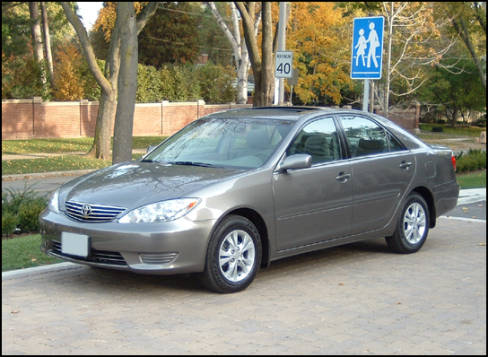
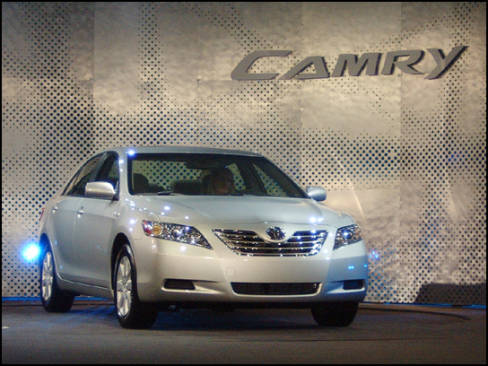
| Toyota hopes to reduce the number of imported Camrys down to zero for the new generation. (Photo: Jonathan Yarkony, Canadian Auto Press) |
According to a report in Automotive News, Toyota CEO Katsuaki Watanabe doesn't expect the additional output from Subaru's Indiana plant change the production mix in Georgetown, where it builds Camrys, Avalons and Camry Solaras. Rather, he hopes to see the number of Camry imports reduced "to zero".
This won't be difficult, mind you, as Toyota only imported 28,816
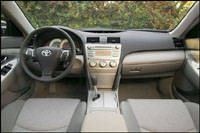 |
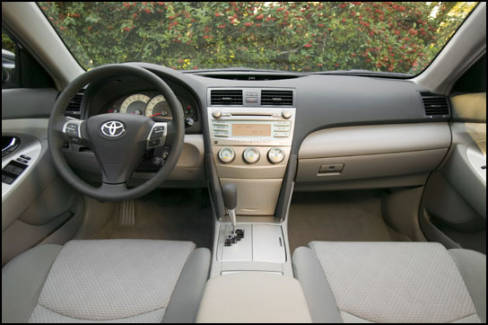
| Pushing sales to 500,000 units would certainly help maintain the Camry's number one sales title. Oh, and the interior of the new '07 model is quite nice too. (Photo: Toyota Canada) |
That 2007 model, incidentally, started production in Georgetown in mid-February, with deliveries to dealers expected soon.
Article Gallery