





How Many Years Until Toyota Surpasses GM as Number One Sales Leader?
Those who grew up in North America might remember back to the late '60s, early '70s, when a variety of small Japanese "economy" cars entered the market from a seemingly hodgepodge group of unknown manufacturers, vying for our attention and dollars. Few took them seriously at first, especially those automakers in and around Detroit who at that time owned such a large percentage of our loyalty that blue skies seemed to be in the forecast forever.
Now the world's number one giant, General Motors is struggling to support an aging workforce being forced into retirement, and with that fat benefit packages that were "negotiated" when the automaker was riding high on profits and didn't want to see any potential shut-downs occur. A similar scenario can be painted in Dearborn, Ford's global headquarters, while Chrysler Group was forced to shape up long ago when it nearly closed shop in the early '80s and then again at the turn of the century.
Now, while GM is still number one, Chrysler is no longer number three and Ford more or less lost its grip on second place, the latter two victims of Toyota's interstellar rise in popularity. But these two are not alone. Most manufacturers are facing looming attrition rates and would be happy just to maintain their customer base on a one to one basis, a scenario that would see one customer gained for every customer lost to a rival. Toyota,
on the other hand, attracts six new customers to each one it loses, a staggering number that has domestic automakers, as well as some imports, in a quandary. Just how will they put a stop to this momentum?
Toyota doesn't believe they can, at least not over the short term. The Tokyo, Japan based automaker is targeting a North American sales increase of 21 percent by 2008, according to Japanese daily Nihon Keizai in a report Monday, citing official company spokespeople. The dramatic increase will be due to the introduction of subcompact and hybrid models, stated the report.
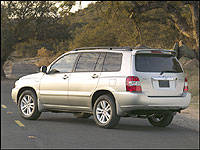 |
| Now, while GM is still number one, Chrysler is no longer number threeand Ford more or less lost its grip on second place, the latter twovictims of Toyota's interstellar rise in popularity. (Photo: ToyotaCanada) |
Now the world's number one giant, General Motors is struggling to support an aging workforce being forced into retirement, and with that fat benefit packages that were "negotiated" when the automaker was riding high on profits and didn't want to see any potential shut-downs occur. A similar scenario can be painted in Dearborn, Ford's global headquarters, while Chrysler Group was forced to shape up long ago when it nearly closed shop in the early '80s and then again at the turn of the century.
Now, while GM is still number one, Chrysler is no longer number three and Ford more or less lost its grip on second place, the latter two victims of Toyota's interstellar rise in popularity. But these two are not alone. Most manufacturers are facing looming attrition rates and would be happy just to maintain their customer base on a one to one basis, a scenario that would see one customer gained for every customer lost to a rival. Toyota,
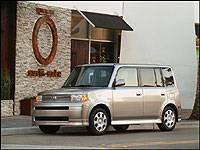 |
| The Tokyo, Japan based automaker is targeting a North American sales increase of 21 percent by 2008. (Photo: Toyota Canada) |
Toyota doesn't believe they can, at least not over the short term. The Tokyo, Japan based automaker is targeting a North American sales increase of 21 percent by 2008, according to Japanese daily Nihon Keizai in a report Monday, citing official company spokespeople. The dramatic increase will be due to the introduction of subcompact and hybrid models, stated the report.