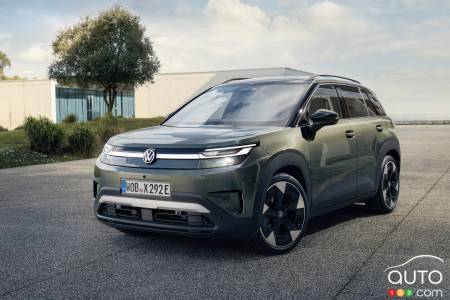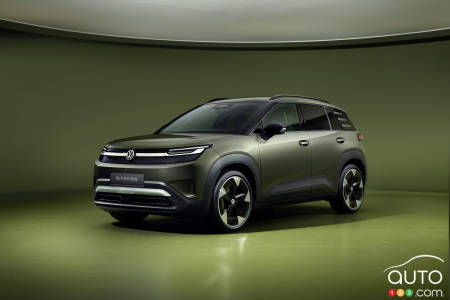



For the Volkswagen Group, 2026 has been, if not an annus horribilus, a trying one, marked by sliding profits, restructuring and intense market headwinds. Desperate for a turnaround, Europe’s largest automaker has pulled the bedsheet off what may be its most critical vehicle in years.
A heavy burden for the Cross
The all-electric ID. Cross launches in global markets this autumn, carrying some heavy weight on its subcompact crossover shoulders. What is the heavy burden carried by the Cross? It will be tasked with contributing to a reversal of VW's fortunes and proving the brand can build affordable, profitable EVs capable of fending off fierce Chinese competition.
There are no plans to launch the new ID. Cross in North America, unfortunately. Never say never, we like to say.
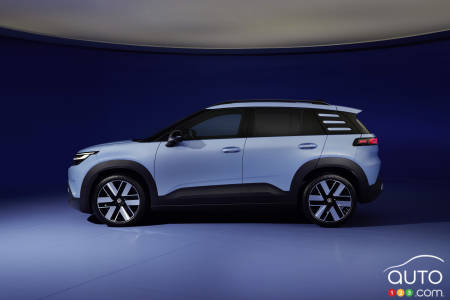
Design of the 2027 Volkswagen ID. Cross
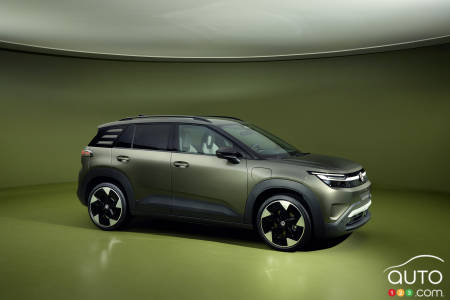
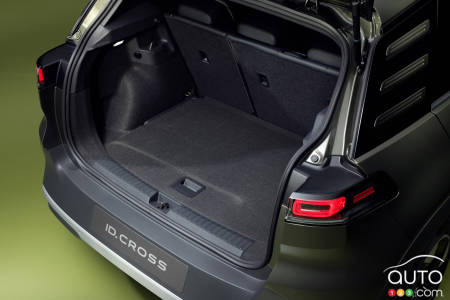
Positioned as the electric alternative to the gas-powered T-Cross, the ID. Cross is designed as an unpretentious city car with rugged SUV styling. Despite its modest 4153-mm footprint, the vehicle maximizes interior space, offering a practical 481 litres of cargo capacity.
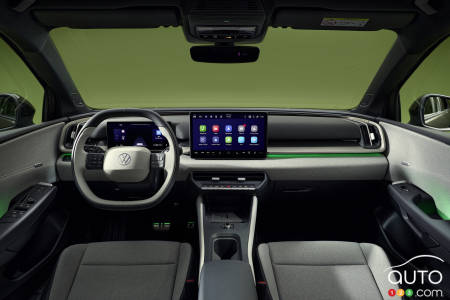
Inside
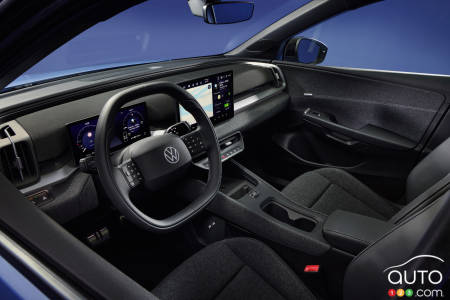
Volkswagen is making good on its promise to fix past ergonomic missteps. The cabin features a simplified dashboard layout with actual physical buttons and dials. Drivers can also toggle the Digital Cockpit Pro display to a retro-themed cluster inspired by the original first-generation Golf.
Next-gen tech under the skin
The ID. Cross is the final piece of VW Group’s new urban EV family, sharing a front-wheel-drive MEB+ architecture with the ID. Polo and other of the group’s European electric models. It also incorporates the company's newly developed “Unified Cell” technology in a structural, cell-to-pack battery design.
The vehicle lineup features three powertrain options and two battery sizes:
• Base (Trend): Combines a 37-kWh LFP battery with a 114-hp (85 kW) motor, offering a preliminary range of up to 316 km.
• Mid-tier: Steps up to a 133-hp (99 kW) motor using the same 37-kWh pack.
• Top-spec: Features a 52-kWh NMC battery paired with a 208-hp (155 kW) motor, boosting range up to 436 km.
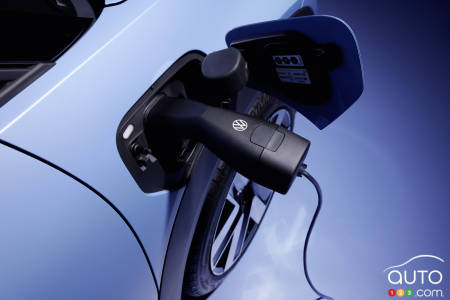
DC fast charging comes standard across the board, enabling a 10-to-80 percent charge in roughly 24 minutes.
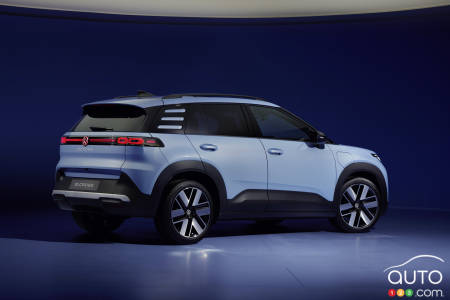
While Volkswagen has confirmed the ID. Cross will not be sold in the U.S., it is priced aggressively for other global markets. In Germany, pricing starts at a highly competitive €27,995 (just under $45,000 CAD) for the base Trend trim, while the high-output versions start at €36,525 (about $58,500 CAD)
Alongside the new ID. Polo, this vehicle represents the future of VW's volume strategy. And given the latrine trench the auto giant currently finds itself in, increasing volume is crucial for it. Failure is simply not an option.
Meanwhile, perhaps we can spend the weekend trying to figure out how to convince VW to bring this EV to Canada? After all, if Kia can go its own way in the Great White North on affordable smaller EVs, why not Volkswagen?