Google and nVidia Give VW Nav a Whole New PerspectiveNavigation systems are hot commodities in
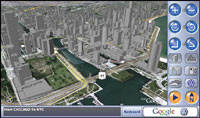 |
| Just imagine seeing this on the way into town every day... (Photo: Volkswagen Canada) |
today's automotive market. Whether aftermarket or OEM, they're an example of future-think technology available right now; something that people could only dream of ten years ago. As costly as nav systems are, they've completely changed the face of driving, often taking much of the stress and hazard out of a journey to an unfamiliar place. No longer is a road map or a print-out of a route plan necessary, or even your memory to effectively get you where you're going; all that's needed is enter in your destination and follow the soothing voice and clever graphics of the nav system.
Have
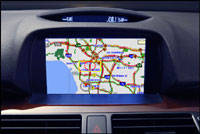 |
| Acura was the first in line to provide real-live communication for traffic jam avoidance. (Photo: Acura Canada) |
you ever wished your navigation system did more? Automakers are taking this into account, constantly upping the ante with each new model: the switch from CD to DVD has reduced load times as well as the number of discs needed to cover the entire country dramatically, and the quality of screens and user interfaces have also improved, allowing companies like Nissan to offer a bird's eye view of your route and Audi the ability to enter in data while on the move. Some systems are particularly advanced, such as the NAVTEQ (XM Satellite) system in the U.S.-market Acura RL, which uses live technology to alert you when there are traffic blockages, and instantly re-route you around a jam saving you time and quite possibly your sanity. If you like the sound of this, then Volkswagen's next-generation navigation system should be an absolute treat.
Chances are, sometime between reading this article and the first time
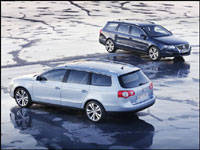 |
| Volkswagen Passat: a good car, in need of a good navigation system. Hopefully, Google can help deliver. (Photo: Volkswagen Canada) |
you started using the internet, you've heard of, or utilized the services of Google. What started out as a web search engine operated by a bunch of university students has turned into a multi-billion dollar corporate empire, which has branched out to different, although complementary market verticals significantly. Google's biggest foray, aside from its blitzkrieg on NASDAQ, was to create an interactive map of the entire world using photos taken by satellites. They called it Google Earth (http://earth.google.com), and it's a very entertaining way of passing a few hours, exploring the surface of our green and blue planet. Aside from being a marvel of human progress, it still has yet to prove any viable use... that is, until Google crossed paths with Volkswagen.
At
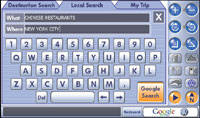 |
| Touchscreen interface is similar to what already out on the market. (Photo: Volkswagen Canada) |
this year's Consumer Electronics Show in Las Vegas, Volkswagen and Google presented the first prototype of their brainchild, a completely different kind of navigation system packed with unheard of new features. The system is so advanced that it's been touted by the media as the closest thing to a "virtual reality travel information" system. On the surface, the new development works and functions like a touch-screen navigation system. You enter in data through the on-screen keyboard, while the interface also controls the stereo, and other functions, like most modern all-in-one media centres. Of course, not to be outdone by what's currently on the market, the system provides a live feed of information about the traffic, and the weather.