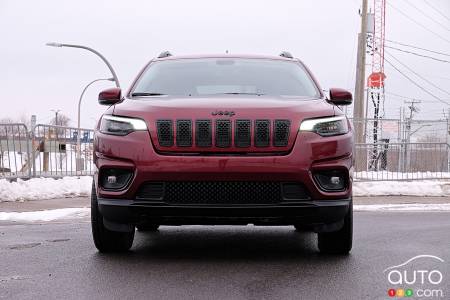
# 9 A precursor
The Cherokee’s career began in 1974, as a two-door version of the Jeep Wagoneer (1962-1991); it also served to shove the underperforming Jeepster Commando out the door. A first four-door Cherokke saw the light of day in 1977. Aiming to seduce a younger clientele than generally went for the venerable Wagoneer, the company’s marketing gurus invented a wholly new expression to help define the new model: Sport Utility Vehicle, or SUV. And thus was born a monster that has stayed with us ever since, eating up and spitting out sedan models in its path!


# 10 A long CV
To mark the advent of the model’s second generation in 1984, Jeep threw overboard the ladder construction of the outgoing Cherokee in favour of a monococque construction – another first for the company. Consumers loved the idea, as it helped being the concept of car-like comfort to a “truck”. Jeep’s rivals did not fail to take note.
The Cherokee was so popular that when it came time for a third generation in 2002, Chrysler launched the Grand Cherokee, with little brother becoming the Liberty in North America (though it kept the Cherokee name in global markets). Thus began the compact utility model, which foreshadowed the arrival of the even-smaller Compass/Patriot duo in 2007.
A year after that, Jeep introduced Generation 4 of what it still then called the Liberty; at the same time Dodge threw its hat in the ring with a twin brother, the Nitro.
With the fifth generation, in 2014, began the crossover era. The Liberty name was mothballed and Cherokees were once again to be found at dealerships. As part of the overhaul, the model grew bigger to make room in the Jeep lineup for the Renegade.

# 11 An unmistakable visual signature (bonus!)
The famed front grille with its seven vertical bars has made Jeeps as recognizable on the road as Rolls Royces; but originally the design created by Ford for its GPW called for nine bars. Would it have become as iconic? We’ll never know…