





Finally, the design and interior of the Elantra are generally loved too-- with many drivers defining the cabin as ‘accommodating and comfortable’. Value, long-distance comfort, sporty handling and the lengthy warranty coverage round out the list of things Elantra owners love about their cars.
Of course, there are those with complaints. These typically include wind and road noise, as well as issues with ‘premature’ wear of tires, brakes and clutches. Note that the lifespan of these items largely depends on driving habits, but that all should be checked out prior to purchase.
Many owners wish for a trunk-release button on the remote keyfob, as well as a better standard stereo system. Other complaints are generally of the nit-picky variety, and tend to deal with squeaks, rattles, and low-budget interior trim. These issues are fairly standard for a used car in this price range.
On a test-drive, ascertain the condition of the exhaust system-- noting any leaks or excessive rust on the front section of the exhaust closer to the engine. Several owners have reported having failed ‘B-Pipes’ replaced under warranty.
The B-Pipe connects the exhaust manifold to the rest of the exhaust system. If it’s rusted through or cracked, you’ll hear an unwelcome sound ranging from a quick, rhythmic ‘ticking’ that speeds up with engine revs to a loud, obtrusive droning while driving.
Check for and diagnose any check engine lights, and inspect the condition and levels of all vital fluids. Be sure to pay special attention to the condition and level of the automatic transmission fluid, and be sure the unit shifts cleanly and without any unusual jerkiness or sounds. Though Elantra seems to be relatively free of serious driveline issues, the automatic transmission could suffer from faulty sensors that cause a variety of problems.
Similarly, a bad sensor under the hood could cause problems with smooth engine idle or operation, even without a check engine light being activated. Be extra sure the used Elantra you’re driving runs, idles, accelerates and shifts smoothly. If it doesn’t, be sure to determine why.
As a final note, the Elantra’s engine uses a timing belt to help maintain its mechanical heartbeat. Timing belts require periodic replacement before they fail, or severe engine damage could result. Be sure to determine how much useful life remains on your potential used Elantra’s timing belt, replacing as needed. If in doubt, ask your local dealer for assistance.
As cheap used cars go, you could do much worse. Decent mileage, low prices and generally reliable operation should make this one a priority test-drive in a small used car.
photo:Hyundai
Of course, there are those with complaints. These typically include wind and road noise, as well as issues with ‘premature’ wear of tires, brakes and clutches. Note that the lifespan of these items largely depends on driving habits, but that all should be checked out prior to purchase.
Many owners wish for a trunk-release button on the remote keyfob, as well as a better standard stereo system. Other complaints are generally of the nit-picky variety, and tend to deal with squeaks, rattles, and low-budget interior trim. These issues are fairly standard for a used car in this price range.
On a test-drive, ascertain the condition of the exhaust system-- noting any leaks or excessive rust on the front section of the exhaust closer to the engine. Several owners have reported having failed ‘B-Pipes’ replaced under warranty.
 |
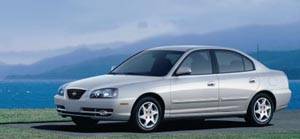
| 2006 Hyundai Elantra |
The B-Pipe connects the exhaust manifold to the rest of the exhaust system. If it’s rusted through or cracked, you’ll hear an unwelcome sound ranging from a quick, rhythmic ‘ticking’ that speeds up with engine revs to a loud, obtrusive droning while driving.
Check for and diagnose any check engine lights, and inspect the condition and levels of all vital fluids. Be sure to pay special attention to the condition and level of the automatic transmission fluid, and be sure the unit shifts cleanly and without any unusual jerkiness or sounds. Though Elantra seems to be relatively free of serious driveline issues, the automatic transmission could suffer from faulty sensors that cause a variety of problems.
Similarly, a bad sensor under the hood could cause problems with smooth engine idle or operation, even without a check engine light being activated. Be extra sure the used Elantra you’re driving runs, idles, accelerates and shifts smoothly. If it doesn’t, be sure to determine why.
As a final note, the Elantra’s engine uses a timing belt to help maintain its mechanical heartbeat. Timing belts require periodic replacement before they fail, or severe engine damage could result. Be sure to determine how much useful life remains on your potential used Elantra’s timing belt, replacing as needed. If in doubt, ask your local dealer for assistance.
As cheap used cars go, you could do much worse. Decent mileage, low prices and generally reliable operation should make this one a priority test-drive in a small used car.
photo:Hyundai


Article Gallery