





Rather than using liquid hydrogen as a combustion fuel, the Audi A2H2 combines the gas with oxygen, which is converted
 |
| Rated at 150 horsepower and 313 lb-ft of torque, the zero-emissions A2H2 is effectively the most powerful A2. (Photo: Volkswagen Canada) |
In normal conditions, the A2H2's fuel cell provides a direct energy flow to the electric motor, but under hard acceleration, such as that used for climbing a hill or passing a vehicle, current is drawn from both the fuel cell and the storage battery.
Total maximum output is rated at 150 horsepower and 313 lb-ft of torque, effectively making this zero-emissions variant the most powerful A2. According to simulations done by Audi, the A2H2 is capable of reaching 100 km/h in
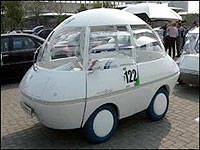 |
| Not all Bibendum Challenge entrants were as stylish as Audi's monobox shape. (Photo: Michelin Bibendum Challenge) |
Another critical point which separates the A2H2 from other hydrogen-powered vehicles is that it uses compressed gaseous hydrogen as opposed to liquid hydrogen. Stored in three Dynetek fuel tanks which hold a total of 1.8 kg (3.96 lb) of hydrogen gas, the A2H2 has a range of 220 km (137 miles).
With a capacity for hydrogen equivalent to about six litres of gasoline, the A2H2 effectively has a consumption figure of about (surprise, surprise) 3 L/100 km, or 94 mpg. The only difference is that the A2H2 produces water vapour instead of carbon dioxide, sulfur and other toxic tailpipe emissions.