Nevertheless, this full hybrid system doesn't change any of the dynamic or structural features of the Q7; the all-wheel drive is still the Torsen quattro system,
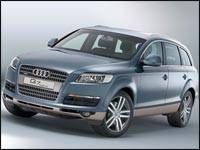 |
| If the vehicle is stopped for more than three seconds, the engine will shut off. (Photo: Audi of America) |
while the gearbox is a six-speed Tiptronic automatic. Start-ups are slightly quicker thanks to the high-power electric motor that doubles as a starter. Intelligently, the car automatically shuts the gasoline engine off when coasting or decelerating to provide maximum energy recovery. If the vehicle is stopped for more than three seconds, the engine will also shut off - a slightly better method than the five or six requirements that Honda's hybrids must meet before shifting into Idle Stop mode.
If Audi chooses not to wedge the W12 under the hood of the Q7, the Hybrid version will be the quickest Q7. While
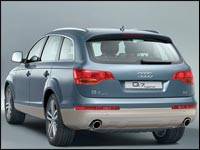 |
| Sixty mph from standstill whips by in a mere 6.7 seconds, impressive for a seven-seat sport utility vehicle. (Photo: Audi of America) |
figuring out the total output of gasoline and electric motors together isn't quite as simple as it would be for a single power source, the electric components provide a credible benefit. Sixty mph from standstill whips by in a mere 6.7 seconds, impressive for a seven-seat sport utility vehicle. For comparison's sake, a regular Q7 V8 takes 7.3 seconds to do the same task. Despite the fact that the battery, motor and all other necessary electric-related components actually make the Q7 Hybrid 309 pounds heavier than it's conventionally power sibling, it uses an average of 19.6 mpg on the mixed cycle, a 13 percent improvement.