





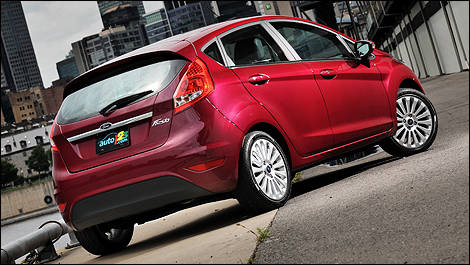
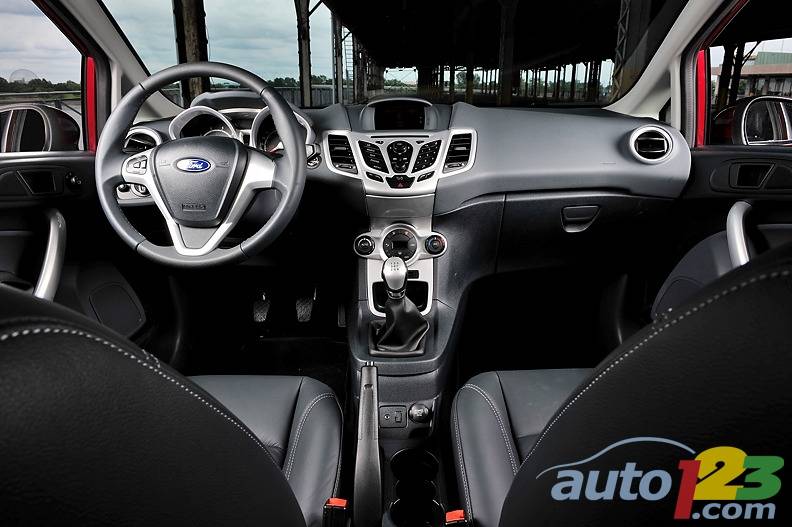
There are two red flags, though. First, closing the doors produces an odd sound and gives the impression that the Fiesta is fragile. I don’t know if this foreshadows unpleasant body noises, but the doors do feel like they were made from a not-so-solid material. The other red flag is the back of the rear seats, which is all metal -- no carpeting or plastic cover.
Surprising performer
On the road, the Fiesta is surprisingly fun and spirited. No performance figures have been released since the Canadian variant will likely feature a different powertrain. Yet, it’s clear that the little Ford has some bite.
Granted, this is no race car. However, the compact 1.6-litre mill is responsive, allowing smooth, enthusiastic accelerations. As for the typically European steering, it precisely communicates all the information you need to have fun behind the wheel.
The Fiesta handles with agility and liveliness. Pay special attention to the manual gearbox, however; the third gear requires a delicate touch and great precision from your right hand. Overall, the transmission works like a charm. The car feels bigger than it actually is as a result of its pleasant dynamics.
And while the suspension won’t get unanimous approval considering the slightly firm ride, Ford has got to keep it the way it is. Driver confidence and vehicle stability are boosted, and passenger comfort isn’t really compromised. So please, Ford, keep the European suspension!
In case you’re wondering, I spent a few days driving the Fiesta with little effort on my part to limit travels or avoid the city and I still wound up with an average fuel economy of under 7 L/100 km.
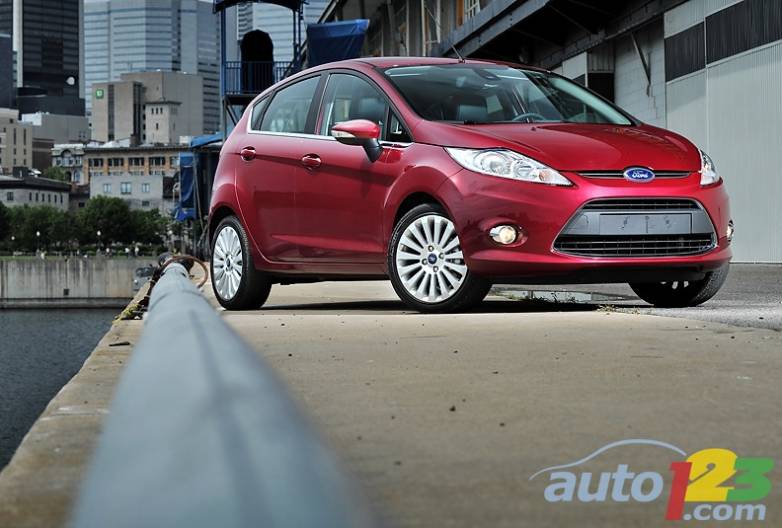
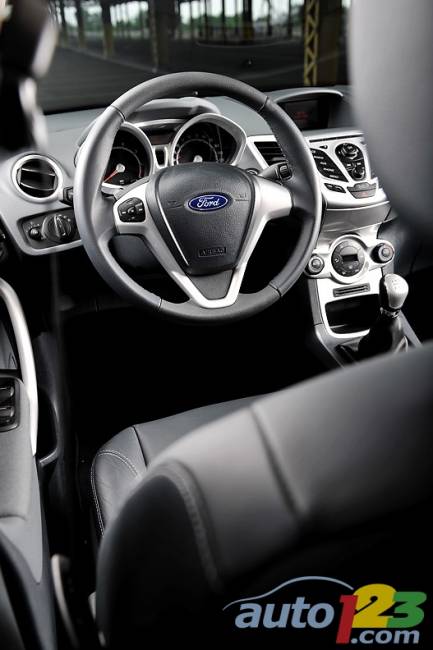
The big question now is: how much? The European Ford Fiesta we tested was packed with all sorts of options and accessories, including leather seats, so its high cost does not give a good indication of how the model will be priced over here. In all likelihood, the Fiesta will undercut the entry point of the Focus and directly take aim at rival subcompacts.
So, while patience is still required for a couple of months, small-car buyers will likely tell you it was worth the wait!
photo:Matthieu Lambert
Surprising performer
On the road, the Fiesta is surprisingly fun and spirited. No performance figures have been released since the Canadian variant will likely feature a different powertrain. Yet, it’s clear that the little Ford has some bite.
Granted, this is no race car. However, the compact 1.6-litre mill is responsive, allowing smooth, enthusiastic accelerations. As for the typically European steering, it precisely communicates all the information you need to have fun behind the wheel.
The Fiesta handles with agility and liveliness. Pay special attention to the manual gearbox, however; the third gear requires a delicate touch and great precision from your right hand. Overall, the transmission works like a charm. The car feels bigger than it actually is as a result of its pleasant dynamics.
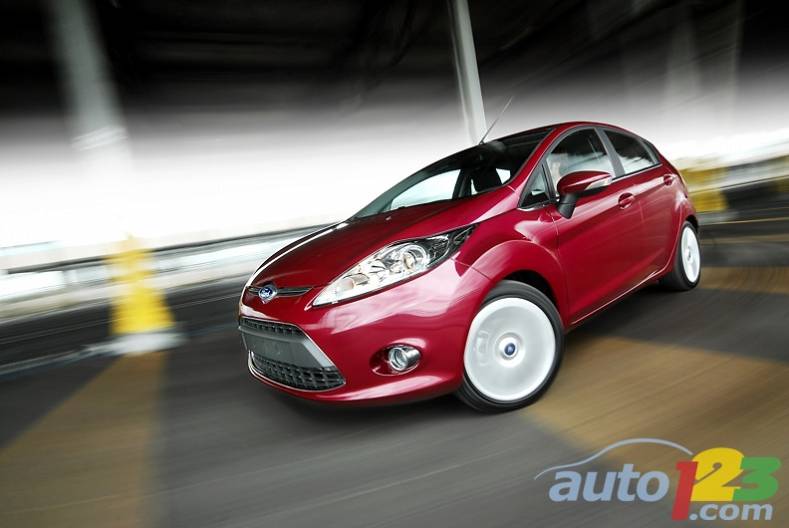
 |
| The Fiesta handles with agility and liveliness. |
And while the suspension won’t get unanimous approval considering the slightly firm ride, Ford has got to keep it the way it is. Driver confidence and vehicle stability are boosted, and passenger comfort isn’t really compromised. So please, Ford, keep the European suspension!
In case you’re wondering, I spent a few days driving the Fiesta with little effort on my part to limit travels or avoid the city and I still wound up with an average fuel economy of under 7 L/100 km.
The big question now is: how much? The European Ford Fiesta we tested was packed with all sorts of options and accessories, including leather seats, so its high cost does not give a good indication of how the model will be priced over here. In all likelihood, the Fiesta will undercut the entry point of the Focus and directly take aim at rival subcompacts.
So, while patience is still required for a couple of months, small-car buyers will likely tell you it was worth the wait!
photo:Matthieu Lambert
Article Gallery