


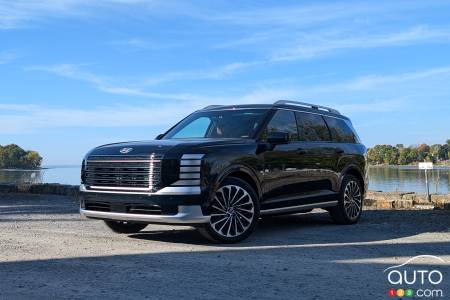



• Auto123 reviews the 2026 Hyundai Palisade.
There were high hopes at Hyundai for the Palisade when the Korean auto giant rolled it out in year one (2020). But its success out of the gate may have surprised even its makers. The model, flush with awards in its first years on the market, quickly established itself as a leader in the three-row family SUV segment, particularly in Canada, thanks in good part to a high level of features, attractive styling and bang-for-buck.
For 2026, the second-generation Palisade arrives, and it's not just a simple refresh. It’s a ground-up redesign built on a new platform, featuring a boxier new look, more spacious interior and — most importantly for the Canadian market — a new hybrid powertrain. The introduction of that configuration comes at a time when consumers are, at least in the short term, turning away from BEVs and towards the reassuring embrace of hybrid vehicles. For Hyundai to release a new generation of the Palisade without such an option seems unthinkable, now that it is here.
2026 Hyundai Palisade - What’s New?
The 2026 Palisade is built on Hyundai's newer N3 platform, which it shares with other models like the Santa Fe. This new foundation allows the Palisade to grow in size. The new edition is thus longer and wider and features a longer wheelbase. And of course, that translates into more interior volume, particularly for the second and third rows as well as in the cargo area.
The other significant change is under the hood. The long-serving 3.8L V6 engine has been retired, making way for a 3.5L V6, as well as that welcome 2.5L turbocharged engine working within a hybrid system.
The interior also sees a complete overhaul, adopting Hyundai’s modern panoramic curved display and the latest “ccNC” infotainment software.
Design of the 2026 Hyundai Palisade
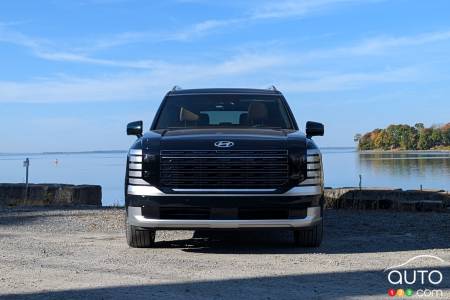
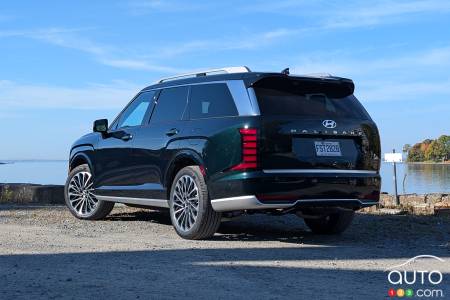
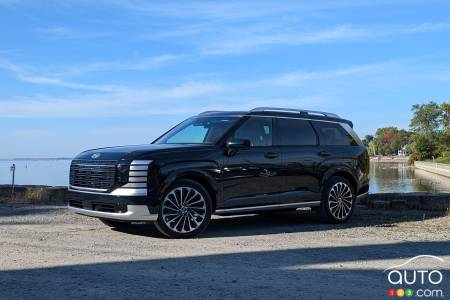
Externally, the 2026 Palisade abandons the more rounded edges and intricate grille of the previous generation for a design substantially more rugged and upright, in closer aesthetic proximity to the current Santa Fe.
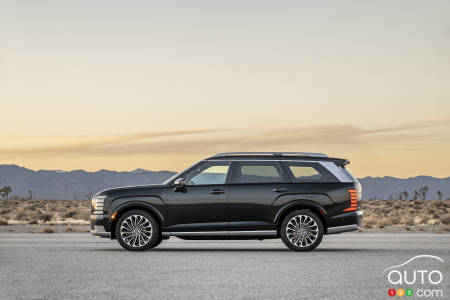
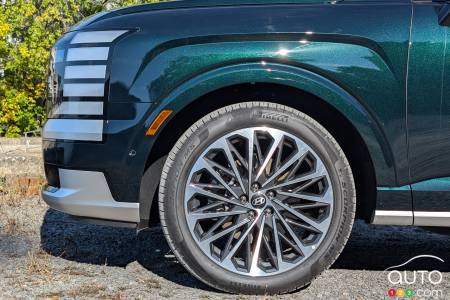
The front end is dominated by a wide, rectangular grille and vertical headlight signatures. The side profile is clean and more traditional, with a longer roofline that doesn't slope down as aggressively, benefiting interior headroom. The more pronounced wheel arches further give the Palisade a more planted stance.
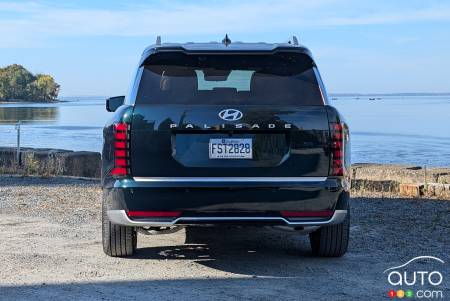
The rear design is also simplified, featuring vertical taillights that mirror the front. Overall, the design moves the Palisade further from crossover territory and more into boxy SUV turf – less Tucson and more Sante Fe.
Interior
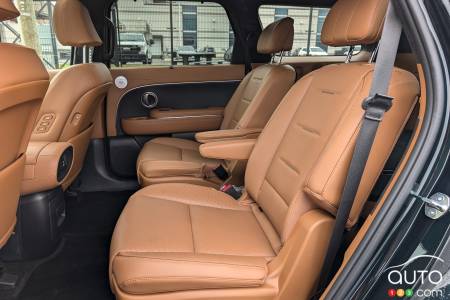
The new platform and the increased dimensions it allows really benefit the cabin of the 2026 Palisade. The increased wheelbase makes the third row significantly more accessible and comfortable for adults, not just children. The second row continues to be offered as either a three-person bench or dual captain's chairs, depending on the trim.

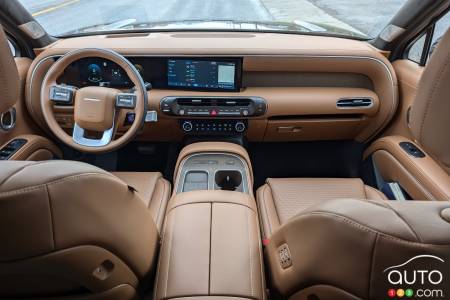
The dashboard has been completely modernized. The old hooded instrument cluster and separate infotainment screen are gone, replaced by a single panoramic curved display that houses both a 12.3-inch digital gauge cluster and a 12.3-inch navigation screen.
The gear selector has been moved to the steering column, freeing up the centre console for storage and cupholders as well as dual wireless charging pads (available as an option). And rest assured, Hyundai has retained physical buttons and dials for primary climate controls and volume, so need for time-wasting, annoying and potentially dangerous menu scrolling to make those common adjustments.
Cargo space for the 2026 Palisade is 540 litres, which climbs to as high as 1,310 with the second and third rows folded down.
Technology of the 2026 Hyundai Palisade
This wasn’t going to be neglected, of course. The 2026 Palisade receives Hyundai's latest Connected Car Navigation Cockpit (ccNC) infotainment system, now faster and more intuitive, and makes possible over-the-air (OTA) updates.
Standard features include wireless Apple CarPlay and Android Auto. Higher trims also offer Hyundai’s Digital Key 2, allowing drivers to use their compatible smartphone as a key. The latest Hyundai SmartSense safety suite is standard.
Available features include Highway Driving Assist 2 (HDA 2), which provides advanced lane-centering and adaptive cruise control with lane-change assist capabilities.
Powertrains of the 2026 Hyundai Palisade
For 2026, the standard engine is a 3.5L V6, good for 287 hp and 260 lb-ft of torque, paired with an 8-speed automatic transmission. Hyundai’s official line is that this mill provides similar acceleration to the old V6 but with better low-end torque.
The highlight of the new lineup is the 2.5L turbocharged hybrid powertrain. This system (distinct from the 1.6T hybrid in the Santa Fe) is designed to compete with Toyota's Hybrid Max. Paired with a 6-speed automatic transmission, this powertrain is focused on both torque and efficiency.
Estimated combined city/highway fuel consumption is 10.6L/100 km with the V6 (12.7L with the XRT-Pro), and a much nicer sounding 6.9L/100 km with the hybrid powertrain.
In Canada, Hyundai’s HTRAC All-Wheel Drive is standard on all models, including the hybrid.
2026 Hyundai Palisade - Versions and pricing for Canada
Given this is a new generation, which incorporates a fresh design, new tech and the hybrid powertrain, it’s no surprise pricing for the 2026 Palisade has increased. The Ultimate Calligraphy, for example, is costlier by $3,200.
The lineup is structured similarly to the outgoing model, with the hybrid option available on mid and upper trims. Here’s the full pricing structure:
- • 2026 Palisade Preferred Trend - $53,699 CAD
- • 2026 Palisade XRT Pro - $57,799
- • 2026 Palisade Luxury Hybrid - $60,499
- • 2026 Palisade Ultimate Calligraphy - $62,499
- • 2026 Palisade Ultimate Calligraphy Hybrid - $65,699
The entry Preferred trim provides the 8-passenger configuration and a strong set of standard safety features. The Urban trim typically adds 20-inch wheels, a panoramic sunroof and other comforts. The Ultimate Calligraphy remains the top-tier model, adding Nappa leather, the digital rearview mirror and exclusive interior and exterior trim.
Driving the 2026 Hyundai Palisade
Our tester, a non-hybrid Ultimate Calligraphy, drove smooth and quiet, especially in city driving. But we also noted the occasional sluggishness of the new V6. Some hesitations when ramping up from crawling speed cropped up, perhaps to remind us we’re talking about a big, heavy SUV here, not a compact. We’re curious to see how the driving experience of the hybrid model stacks up in comparison.
On the highway, the new platform delivers a solid and stable ride. The cabin is well-insulated from wind and road noise, so, again, smooth and quiet is the order of the day.
The suspension is tuned for comfort, absorbing bumps well without feeling floaty. It is a capable and comfortable long-distance cruiser, now with an improved fuel range.
The final word
The 2026 Hyundai Palisade is a calculated and necessary evolution of a very popular vehicle. It directly addresses one of its predecessor's few weaknesses – namely, a less-than-spacious third row – and sidesteps the below-average fuel economy complaint if you go for the hybrid. The new, more traditional SUV styling gives it a stronger presence, while the upgraded interior technology keeps it competitive.
With the new 2.5L turbo hybrid, Hyundai is making a clear move toward efficiency. That powertrain – piled atop the refinement and overall value already on offer - gives the Palisade the munitions to compete with the likes of the Toyota Grand Highlander Hybrid.
Competitors of the 2026 Hyundai Palisade
- • Dodge Durango
- • Ford Explorer
- • Honda Pilot
- • Jeep Grand Cherokee
- • Kia Telluride
- • Mazda CX-90
- • Subaru Ascent
- • Toyota Highlander / Grand Highlander
- • Volkswagen Atlas