





At this year’s Christmas family get-together, the women stayed in the kitchen and got dinner ready while they shared the latest gossip, complimented each other on what they’re wearing and talked about how cute the latest newborn of the family is. You know — emotional and spontaneous conversation.
We men, well, we retreated to the host’s basement and talked about hockey, cars and plasma TVs. You know — unsentimental stuff that doesn’t involve a sustained effort from a single-tasking man-brain. By the way, I should point out that the women asked us to go downstairs and leave them amongst themselves. We didn’t argue.
After being asked about my impressions of the 2012 Toyota Prius v I’m driving during the holidays (look for my road test on January 11th), the discussion shifted towards the reputation of car brands.
And this reminded me once again about the way we perceive certain products or services. If you owned a completely disastrous and unreliable product, chances are you won’t buy anything else from that brand again; even if that horrible experience took place 20 years ago.
Bad service can also taint one’s appreciation of a particular brand. The Dell laptop I’m typing on now will likely be the last I own. I bring it to work every morning and it’s on at least 12 hours every day; the quality of the product is not to blame, but rather the awful experience when I purchased it.
Long story short, Dell sent me the wrong power supply twice, and it took a month to sort things out, not to mention countless hours spent on the phone, being put on hold or transferred from one department to another.
The new laptop I just bought is a Toshiba.
The same thing can be said of cars. One family member talked about a 1997 Hyundai his company owns and how unreliable it is; never will he buy a vehicle from that brand. (Ironically, his daughter owns a Hyundai.)
And yet, the Korean brand’s current product lineup is light-years ahead of what it was 15 years ago. Right now, perception is helping Toyota, whose reputation for reliability seems bulletproof, despite the fact many of their current products arguably aren’t exciting to drive or even to look at.
Should we put our past experiences behind us after a while and give companies a second chance? Should someone who was unsatisfied with his or her Hyundai some 20 years ago take the time to see how the Korean manufacturer has improved since then? I say yes.
On the other hand, that means someday I might have to buy another Dell.
We men, well, we retreated to the host’s basement and talked about hockey, cars and plasma TVs. You know — unsentimental stuff that doesn’t involve a sustained effort from a single-tasking man-brain. By the way, I should point out that the women asked us to go downstairs and leave them amongst themselves. We didn’t argue.
After being asked about my impressions of the 2012 Toyota Prius v I’m driving during the holidays (look for my road test on January 11th), the discussion shifted towards the reputation of car brands.
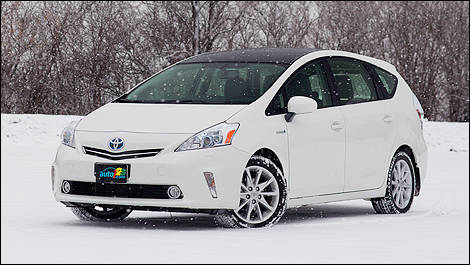 |
| 2012 Toyota Prius V (Photo: Sébastien D'Amour/Auto123.com) |
And this reminded me once again about the way we perceive certain products or services. If you owned a completely disastrous and unreliable product, chances are you won’t buy anything else from that brand again; even if that horrible experience took place 20 years ago.
Bad service can also taint one’s appreciation of a particular brand. The Dell laptop I’m typing on now will likely be the last I own. I bring it to work every morning and it’s on at least 12 hours every day; the quality of the product is not to blame, but rather the awful experience when I purchased it.
Long story short, Dell sent me the wrong power supply twice, and it took a month to sort things out, not to mention countless hours spent on the phone, being put on hold or transferred from one department to another.
The new laptop I just bought is a Toshiba.
The same thing can be said of cars. One family member talked about a 1997 Hyundai his company owns and how unreliable it is; never will he buy a vehicle from that brand. (Ironically, his daughter owns a Hyundai.)
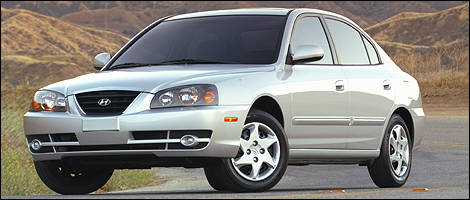 |
| 2004 Hyundai Elantra (Photo: Hyundai) |
And yet, the Korean brand’s current product lineup is light-years ahead of what it was 15 years ago. Right now, perception is helping Toyota, whose reputation for reliability seems bulletproof, despite the fact many of their current products arguably aren’t exciting to drive or even to look at.
Should we put our past experiences behind us after a while and give companies a second chance? Should someone who was unsatisfied with his or her Hyundai some 20 years ago take the time to see how the Korean manufacturer has improved since then? I say yes.
On the other hand, that means someday I might have to buy another Dell.