





Crossovers "are the competition totraditional SUVs... but CUVs will take the last barriers to entry awayfrom the sport utility
market," Pipas said. "In other words, somepeople don't want to buy an Explorer or Expedition or a competitor'sproduct because it's too big, too hard to park, not enough fuel economyor maybe because it's got too much (height or width) or because it'stoo bouncy like a truck."
But the car-based CUVs, such as theFord Freestyle or the Toyota RAV4, have different attributes thatappeal to many more people.
"They are generally more fuelefficient, more comfortable ride and handling, they're not as high offthe ground," Pipas said. "So, the SUV segment in general is going tokeep growing."
There are several reasons for the decline oftraditional SUVs and the rise of
crossovers, which Pipas added will beconsidered "the vehicle of this decade." Vehicle sales are beinginfluenced by the availability of a wide variety of CUV models,customer demographics, and fuel prices that have risen and haveremained at more than 90 cents per litre ($2 USD per gallon) for a longtime.
On the sales side, Pipas pointed out that crossoverswere still just a niche segment of the SUV market in 2000, when only 14models were available and total sales were 541,000 units. This segmentonly started in 1996 with the introduction of the Toyota RAV4 and wasfollowed by vehicles such as the Honda CR-V and the Ford Escape, whilemany had sheet metal designs that made them look more like traditionalSUVs.
Since then, there are now 41 different crossover modelsoffered by automakers in North America, and that number is expected toreach nearly 50 models next year.
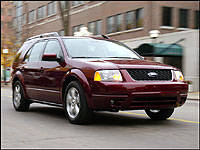 |
| Car-based CUVs, such as the Ford Freestyle or the Toyota RAV4, have different attributes that appeal to many more people. (Photo: Ford Motor Company of Canada) |
But the car-based CUVs, such as theFord Freestyle or the Toyota RAV4, have different attributes thatappeal to many more people.
"They are generally more fuelefficient, more comfortable ride and handling, they're not as high offthe ground," Pipas said. "So, the SUV segment in general is going tokeep growing."
There are several reasons for the decline oftraditional SUVs and the rise of
 |
| Since 2000 when there were only 14 crossovers on the market, there are now 41 different crossover models offered by automakers in North America, and that number is expected to reach nearly 50 models next year. (Photo: Mazda Canada) |
On the sales side, Pipas pointed out that crossoverswere still just a niche segment of the SUV market in 2000, when only 14models were available and total sales were 541,000 units. This segmentonly started in 1996 with the introduction of the Toyota RAV4 and wasfollowed by vehicles such as the Honda CR-V and the Ford Escape, whilemany had sheet metal designs that made them look more like traditionalSUVs.
Since then, there are now 41 different crossover modelsoffered by automakers in North America, and that number is expected toreach nearly 50 models next year.