





 |
| Illustration by Craig Scarborough |
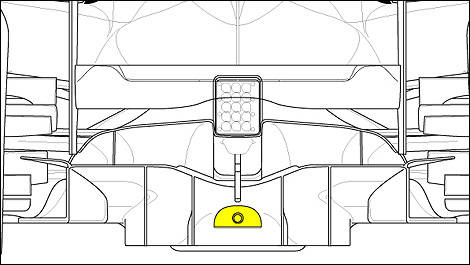
STARTER HOLE
After some teams were exploiting oversized starter motor holes in the diffuser to create a slotted effect, the FIA clamped down with a clarification. This has now been written into the rule book.
 |
| Illustration by Craig Scarborough |
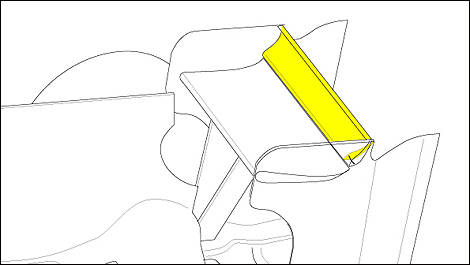
REAR WING
The driver adjustable front wing is now deleted from the rules and instead the rear wing is now driver adjustable. This is because the expected benefit of greater front wing angle never provided the driver with more grip when following another car.
The front flap adjustment was much more a solution to tune the cars handling in between pit stops. The TWG found that the loss of drag from the rear wing was a more effective solution to allow the following to overtake. Now the rear wing flap can pivot near its rear most point and open the slot gap from 10-15mm to up to 50mm. Opening this gap unloads the flap and reduced both downforce and drag.
This being controlled by the timing gap to the car ahead and managed by the FIA. So there's two ways the driver can use the system. Firstly in free practice and qualifying the rear wing is solely at the control of the driver. They can adjust the wing at any point on the track and any number of times per lap. So for the ideal lap time, as soon as the car is no longer downforce dependant (straights and fast curves) the driver can operate the wing, just as they did with the F-duct. Although a small complication to the driving process, at least their hands remain on the wheel and not on a duct to the side of the cockpit.
Then in the race the wing cannot be adjusted for two laps, then race control will send signals to the driver via the steering wheel, such that when they're one second or less behind another car at a designated point on the circuit, the rear wing can be trimmed out. The wing returns to the original setting as soon as the brakes are touched.
To read about the many other changes, click here to see the complete article on Craig's blog page.