





In a significant pivot that highlights the volatile nature of the automotive industry’s transition to electric power, Honda is extending the production cycles of several high-volume models, in some cases to more than a decade. The strategy comes as the Japanese automaker grapples with a $15.8 billion (USD) financial hit following the cancellation of several ambitious electric vehicle programs.
According to a supplier memo reviewed by Automotive News, Honda and luxury division Acura will delay the arrival of next-generation models for the Odyssey, Accord, HR-V, MDX and Integra. Instead of the traditional five-to-six-year redesign cycle, these proven platforms will be hanging around for a bit longer than usual, in a bid to squeeze them for more cash as the automaker redirects its focus toward hybrid technology.
The risk of stale products
For a brand that prides itself on engineering and innovation, stretching life cycles presents a significant market risk. “New product drives new consumers to the brand,” one dealer told Automotive News. “When we extend the product cycle... the product tends to start getting stale, and you start seeing defections.”
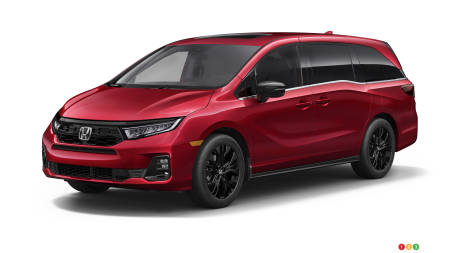
The Honda Odyssey is perhaps the most extreme example. Redesigned in 2017, the current minivan was due for a makeover yesterday. Now, production has been extended by at least three more years, with a new hybrid successor not likely to appear before spring of 2030. By then, the platform will be 13 years old, competing against much newer hybrid-electric rivals like the Toyota Sienna and Kia Carnival.
A new hybrid direction
The belt-tightening over in one corner is meant to help finance development in another. The billions previously earmarked for pure-electric projects are now being re-oriented into R&D for advanced hybrid powertrains. Honda aims to launch 13 new hybrid models starting in 2027.
A key centerpiece of the strategy is a new hybrid V6 powertrain currently in development. Honda says that that engine, expected to debut in the next-generation Odyssey and Pilot around 2030, targets a 30 percent improvement in fuel economy and a 10 percent boost in acceleration over the current 3.5L unit.
The move towards electrified gas-engine models mirrors a broader industry trend where consumers, wary of EV infrastructure and the loss of government tax credits, are gravitating toward hybrids for better fuel economy and relief from the range anxiety that continues to discourage many from going electric.
The 2030 timeline
The supplier memo outlines a decade-long roadmap for Honda’s aging fleet:
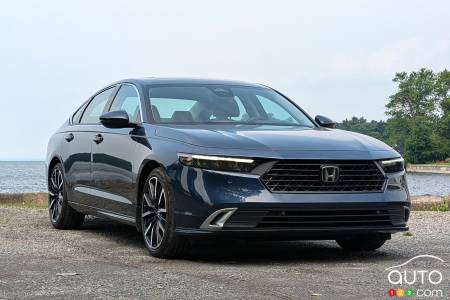
• Accord: Production of the gasoline-only version is extended through March 2030. At that point, the midsize sedan may go hybrid-only.
• MDX: The three-row luxury SUV is on track for a 10-year life cycle, with a replacement not due until early 2031.
• HR-V & Integra: Both models will see their runs stretched until early 2032. Notably, the memo lists no successor for the Integra, sparking concerns that Acura may eventually exit the sedan segment entirely.
While extending these platforms allows Honda to recoup losses and refine its hybrid tech, the brand faces a difficult few years. It must keep these aging models semi-relevant via minor updates and hope that brand loyalists don’t start defecting to rivals presenting increasingly more modern alternatives.
