





Many car owners pay particular attention to preparing their car for the winter months. They check the antifreeze levels, battery connections, belts, and put on snow tires. But did you know that it's just as important to do a pre-winter check on your car's windshield?
Auto glass experts say there are three key steps you can take to help ensure that you don't run into problems with your auto glass this winter.
1) GET MINOR DAMAGE REPAIRED AS SOON AS POSSIBLE
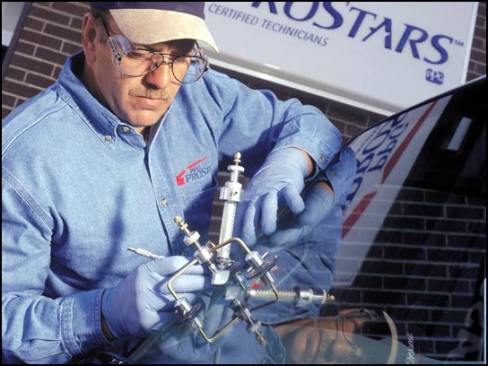
According to Paul Rice, Director for PPG PROSTARS, a nationwide alliance of certified auto glass technicians, the most important thing to remember about minor glass damage is not to procrastinate. "If the rock chip spreads into a crack from vibrations or cold temperatures, it could mean you will need to replace the glass." Rice says that having glass chips repaired can often be done at no cost to the car owner, since many insurance companies defer the deductible on comprehensive policies. Rice says there are a couple rules of thumb when it comes to the type of damage that can be repaired:
2) IF NECESSARY, HAVE YOUR WINDSHIELD REPLACED INDOORS
While a quality windshield replacement only takes about 30 to 60 minutes, the adhesive used to keep the windshield in place needs time to cure, or harden. And, since this process may take longer in cold temperatures, it's best to have your windshield replaced indoors during the winter months. "The time it takes the adhesive to cure will depend on the type of adhesive, and the weather conditions," says Russ Corsi, Manager, Technical Services for PPG. "Be sure to ask your glass technician how long the adhesive will take to cure." Corsi says that depending on weather conditions, temperature and humidity, and the adhesive used, it could take anywhere between 30 minutes and 24 hours for the adhesive to cure. He also says that driving your car before the adhesive has fully cured is very unsafe. "Windshields should never be replaced in inclement weather," Corsi continues. "So in the winter, it's better to do the work inside... just to be safe."
3) TREAT YOUR WINDSHIELD WITH A RAIN REPELLANT
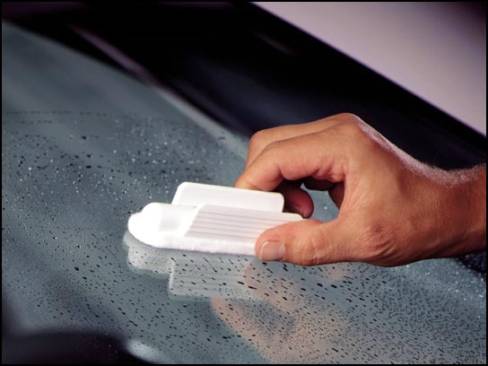
Glass treatments or rain repellants can improve your vision remarkably, says Bob Howard, Director for Aquapel® Glass Treatment, a product manufactured by PPG. "Enhanced vision promotes safer driving," he says. Howard also says that rain repellants, like Aquapel, will cause rain to bead up and roll off the windshield, clearing the driver's view of the road. "What's more," says Howard, "snow and ice are easier to remove once the car's glass has been treated. That means drivers will be more inclined to remove ALL of the snow and ice, rather than just enough to peer out of a small hole."
Howard also says that Aquapel Glass Treatment can be applied in minutes by auto glass and car care specialists when other work is performed, and that the treatment typically lasts for months.
Rice says that it's important that whether you're having your windshield repaired or replaced make sure you take your car to a technician who is trained and experienced.
Auto glass experts say there are three key steps you can take to help ensure that you don't run into problems with your auto glass this winter.
1) GET MINOR DAMAGE REPAIRED AS SOON AS POSSIBLE
According to Paul Rice, Director for PPG PROSTARS, a nationwide alliance of certified auto glass technicians, the most important thing to remember about minor glass damage is not to procrastinate. "If the rock chip spreads into a crack from vibrations or cold temperatures, it could mean you will need to replace the glass." Rice says that having glass chips repaired can often be done at no cost to the car owner, since many insurance companies defer the deductible on comprehensive policies. Rice says there are a couple rules of thumb when it comes to the type of damage that can be repaired:
- Only damage to the outside layer of the laminated safety glass can be repaired.
- If the damage appears in the driver's line of sight (the area just above the steering wheel), the glass should be replaced.
2) IF NECESSARY, HAVE YOUR WINDSHIELD REPLACED INDOORS
While a quality windshield replacement only takes about 30 to 60 minutes, the adhesive used to keep the windshield in place needs time to cure, or harden. And, since this process may take longer in cold temperatures, it's best to have your windshield replaced indoors during the winter months. "The time it takes the adhesive to cure will depend on the type of adhesive, and the weather conditions," says Russ Corsi, Manager, Technical Services for PPG. "Be sure to ask your glass technician how long the adhesive will take to cure." Corsi says that depending on weather conditions, temperature and humidity, and the adhesive used, it could take anywhere between 30 minutes and 24 hours for the adhesive to cure. He also says that driving your car before the adhesive has fully cured is very unsafe. "Windshields should never be replaced in inclement weather," Corsi continues. "So in the winter, it's better to do the work inside... just to be safe."
3) TREAT YOUR WINDSHIELD WITH A RAIN REPELLANT
Glass treatments or rain repellants can improve your vision remarkably, says Bob Howard, Director for Aquapel® Glass Treatment, a product manufactured by PPG. "Enhanced vision promotes safer driving," he says. Howard also says that rain repellants, like Aquapel, will cause rain to bead up and roll off the windshield, clearing the driver's view of the road. "What's more," says Howard, "snow and ice are easier to remove once the car's glass has been treated. That means drivers will be more inclined to remove ALL of the snow and ice, rather than just enough to peer out of a small hole."
Howard also says that Aquapel Glass Treatment can be applied in minutes by auto glass and car care specialists when other work is performed, and that the treatment typically lasts for months.
Rice says that it's important that whether you're having your windshield repaired or replaced make sure you take your car to a technician who is trained and experienced.
Article Gallery