





New 7-Occupant Commander, 4-Door TJ and Light-Duty Crossover Coming in 2006
It's not difficult to see that while DaimlerChrysler has experienced much success with its Jeep nameplate it isn't optimizing the
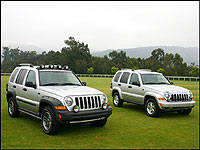 |
| While Jeep is doing well, DaimlerChrysler isn't optimizing the brand as much as it could be. (Photo: Trevor Hofmann, Canadian Auto Press) |
A good example is the Comanche compact pickup truck. It suffered death due to slow sales, partly brought on by a lack of available configurations. When it came onto the scene in the mid'80s, most alternative compact trucks were offering "extra cab" spaciousness, including additional cargo room behind the seats and in some cases jump seats for kids. The
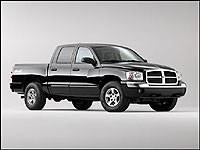 |
| If Jeep wanted to attempt another pickup truck, it wouldn't have to look far for a great architecture to base it on. (Photo: DaimlerChrysler Canada) |
The same could be said of Jeep's J-series full-size pickup truck, that started out as the Gladiator in 1963. While luxuriously appointed in top trim levels and quite stylish compared to its competitors, the truck never made it past the mid-'80s as it didn't give truck buyers enough of what they wanted.
Could luxury pickups be part of Jeep's future? The brand has a long history of building pickup trucks, starting in 1947 with what was simply called the Jeep Truck. It was followed by the large FC 170 in 1957, the Gladiator in 1963, CJ-based Scrambler in '82 and finally the Comanche in 1986 - with the J Series running throughout the '70s and up until 1987. Jeep sure wouldn't have far to go if it wanted to borrow pickup truck architecture to reinvigorate a Jeep pickup truck model lineup, with the Dodge brand's popular Dakota and Ram trucks serving the midsize and full-size markets. Such a move also wouldn't go against Jeep's "Trail Rated" brand philosophy, a minimum off-road capability that lets customers know that their Jeep, no matter which model, can go just about anywhere.