





• Imports of the Chinese-made Polestar 2 into Canada have been suspended.
On October 1st of last year, the Canadian government imposed a 100-percent tax on the import of Chinese-made electric vehicles – a move that aligned Canada with the U.S., it should be noted. Those tariffs came about as governments sought to protect the North American auto industry and prevent an invasion of low-priced Chinese EVs.
And the measure affects not only Chinese manufacturers such as BYD, Nio or XPeng. Established brands, including Volvo and Polestar, are also impacted since of their models destined for Canada are made in China.
Polestar 2 blocked at the borders
The most glaring result to date concerns the Polestar 2, currently assembled exclusively at the Geely Luqiao factory in China. As a direct consequence of Canadian tariffs, any new imported unit is subject to a 100-percent surcharge, thus doubling its price.
Polestar will continue to sell units of the 2 model already in Canada, but no new imports will take place as long as the tariffs are in place.
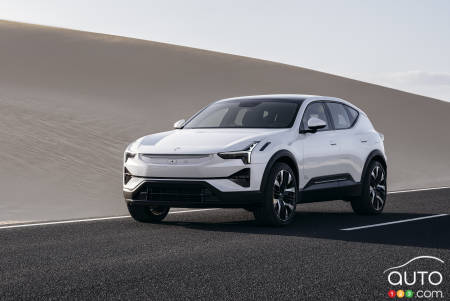
Polestar's priorities
The manufacturer is now turning its focus to the Polestar 3 and Polestar 4 models, which are and will be assembled in South Carolina in the U.S. and Busan in South Korea to avoid the tariff.
Volvo and Mini move production on two EVs
Other brands have taken measures to avoid the punitive tariffs on Chinese products. Initially produced in China, the Volvo EX30 destined for North America is now assembled at the company’s plant in Ghent, Belgium. And while the first units of the all-electric Mini Cooper SE come from China, North American production will soon be transferred to the BMW plant in Oxford, in the United Kingdom.
Tesla anticipated the move
Before the Canadian surcharges came into effect, some Chinese-made Tesla Model Y and Model 3 models were briefly imported into Canada. Today, all Teslas sold in Canada are produced in North America, thus avoiding surcharges.
Are gas-engine vehicles also concerned?
Although the Canadian tariff only applies to electric vehicles, the situation is more complex in the U.S., where all cars made in China, including ICE models, are subject to a 27.5-percent tax.
And this will have an impact for Canada. Several manufacturers who share production lines for both markets have relocated the assembly of certain models. As a result, only two Chinese-origin gas-engine cars are still being sold in Canada:
- • The Lincoln Nautilus, produced in China since the temporary closure of the Ford plant in Oakville.
- • The Buick Envision, manufactured at the Dong Yue Motors plant in China.
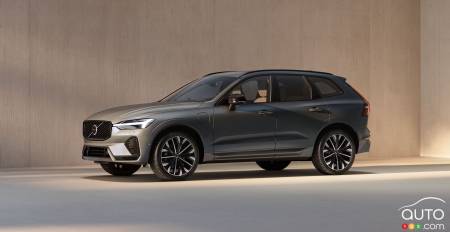
Finally, Canadian versions of the Volvo XC60 plug-in hybrid no longer come from China, but now from the company’s Torslanda plant in Sweden.
An uncertain future for Chinese imports
The new tariffs essentially make importing Chinese electric vehicles almost impossible. We’ll see if other carmakers make adjustments.