


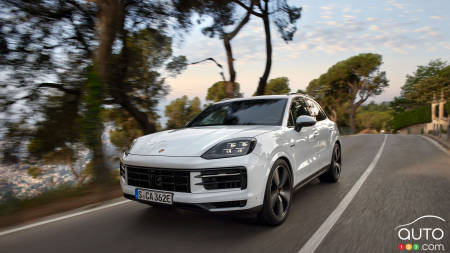



Like other carmakers, Porsche laid out plans at the beginning of the decade to undergo a major electric transformation. The shift projected 80 percent of its sales would be electric vehicles by 2030. But like other carmakers, it is rethinking that target in response to current market realities.
Porsche CEO Oliver Blume stated this week that that 2030 goal is off the table. Instead, the company will focus on hybrid solutions, though without abandoning its electric lineup, which will continue to expand. The development of the electric 718 (Boxster and Cayman) is continuing, for example.
The fact is that EV sales aren't currently meeting projections, meaning the company will have to continue offering gas-engine vehicles if it wants to survive.
“Our goal was to deliver more than 80% fully electric sports cars by 2030. One of the most ambitious goals in the entire industry,” the executive stated. But he added that “In view of market developments, it is not realistic.” He pledged that the company's strategy would adapt to demand and market evolution.
The all-electric Taycan sedan had a blistering start, but its sales didn't keep pace last year. The all-electric Macan is entering the market, and its sales performance will be closely scrutinized.

Regarding SUVs, Oliver Blume mentioned that the company is exploring the possibility of a new series of models that could appear before the end of the current decade, and that these would feature gasoline and hybrid engines.
“The transition phase will probably be much longer than originally thought. That's why we're continuing to take a balanced approach: Combustion engines, hybrids and electric sports cars.”
- Oliver Blume
The executive also touched on the subject of the company's production targets. Last year, Porsche sold 300,000 vehicles worldwide. The new target is now 250,000 units annually. That will means reducing staff and focusing on the value of models rather than volume. The company wants to increase revenue by delivering fewer models but at a higher profit. This solution will evidently involve a proliferation of hybrid options.
Naturally, like any other manufacturer, Porsche will assess things annually, as the industry has been evolving at a furious pace for the past few years, and the next decade could bring even more transformations, some of which could be exponential (like the adoption of electric models).