

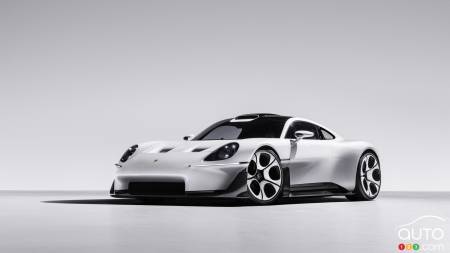



Porsche this week unveiled the Mission S concept, a design study that signals both an evolution of its aesthetic language and the development of a new mid-engine sports car platform. The latter is intended to expand the lineup above the 911.
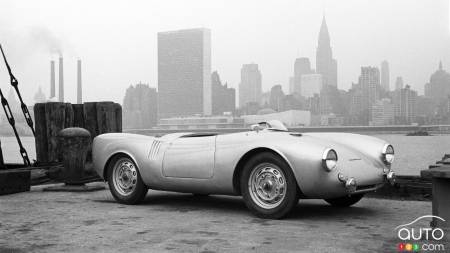
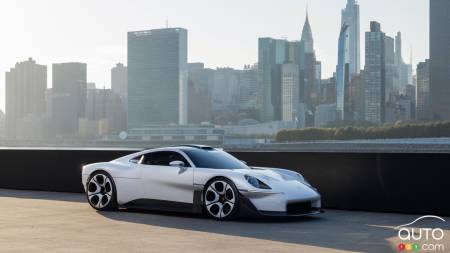
Unveiled on October 15 in New York, the Mission S is part of the German automaker's “Sportwagenschmiede '35” strategic realignment. For the occasion, Porsche selected a pier in the Queens district where its 550 Spyder was photographed in 1953. Even as it evolves, Porsche is reconnecting with its roots.
Slotting in above the 911
Beyond the design exercise, the main announcement involves the role this new architecture could play within the lineup. Porsche aims to develop a permanently available offering of super sports cars, rather than limiting itself to an exceptional model produced as a one-off.
“The Mission S represents a mid-engine super sports car platform positioned above the 911, not as a single hypercar, but as a permanent and versatile addition to our range,” explains Michael Leiters, Chairman of the Executive Board of Porsche.
Powertrain of the Porsche Mission S
The manufacturer remains tight-lipped regarding the project's technical specifications. For now, we thus know nothing about the powertrain intended for it, nor the output, nor even the timeline for launch.
Same deal regarding pricing, unsurprisingly. All of that is still to come.
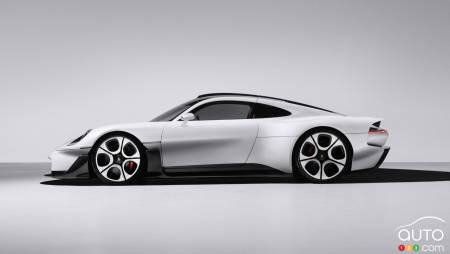
Design of the Porsche Mission S
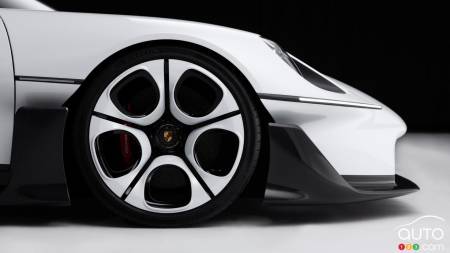
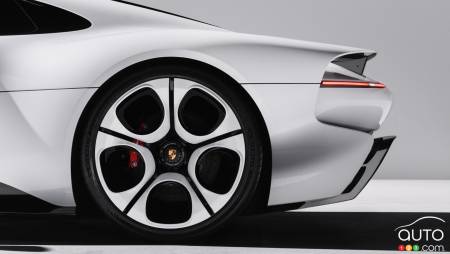
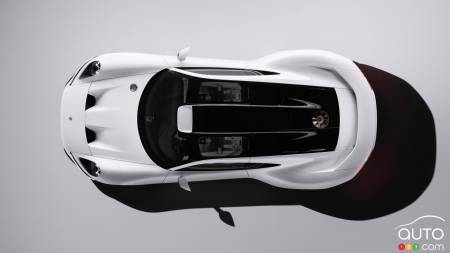
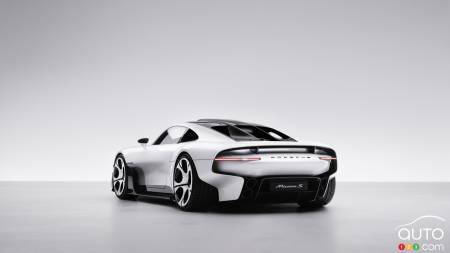
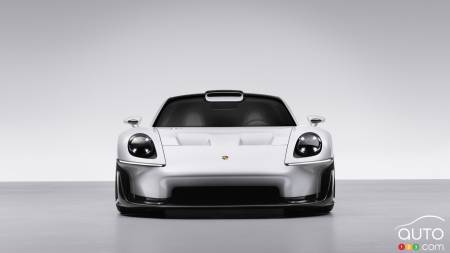
About the design, we know much more, obviously. The Mission S gathers elements inspired by different eras of the brand. Its round headlights and pronounced wings recall the 911, while its low front end is borrowed from the GT1. Porsche also references the 959 for the roofline design and the 928 for the wheels, which feature a treatment aimed at reducing weight.
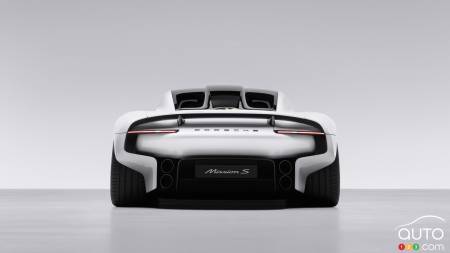
A continuous line connects the front and rear light signatures. Above it, the surfaces place emphasis on the bodywork's volumes.
The mid-engine architecture dictates the vehicle's proportions. An active rear wing is integrated into the bodywork, while certain cooling system details pay homage to the fan of the famous Porsche 917.
These design choices are also intended to provide a glimpse of the aesthetic direction for the manufacturer's future products, though not all concept elements are necessarily destined for production.
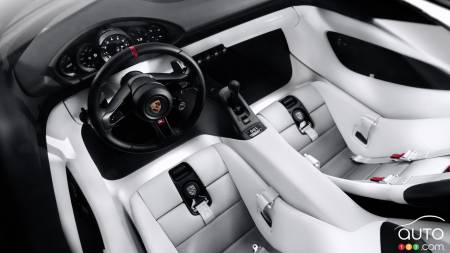
Interior of the Porsche Mission S
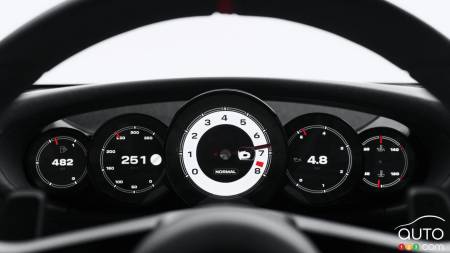
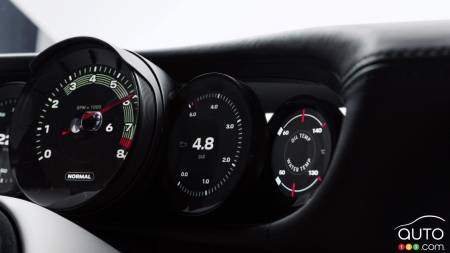
On board, Porsche favours a combination of physical controls and digital displays. The instrument panel retains five circular instruments behind the steering wheel. In the center, the tachometer pairs an analog needle with a recessed screen.
The assembly can change configuration depending on the driving mode. In particular, the tachometer can move closer to the driver, while the other instruments modify their layout.
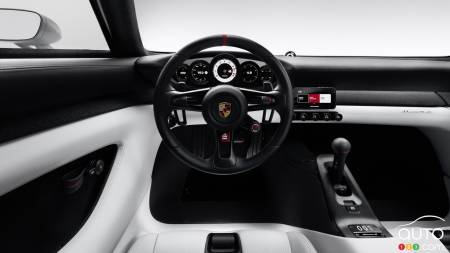
The Mission S also stands out through the absence of a permanently integrated central screen and a fixed passenger display. Instead, Porsche offers a retractable mount compatible with MagSafe technology. The driver's phone can thus be used to display navigation or other information via the My Porsche application.
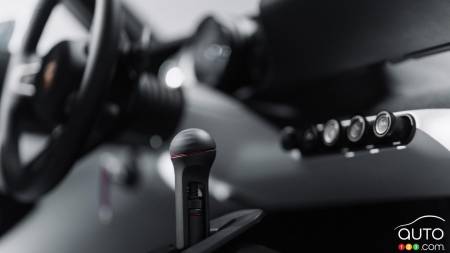
Push and pull controls provide access to various comfort and driving functions. Meanwhile, the key slot remains to the left of the steering wheel. The cabin thus illustrates a desire to reduce the space occupied by screens while retaining certain digital functions.