





Duffield: Jaguar Land Rover Canada reports to our North American group, although we do have a lot of dealings with the U.K. We have the Queen on both our money so we have a tight connection. As part of Jaguar Land Rover North America we have the best of both worlds; we are able to leverage that much larger U.S. organization, but we also have direct dealings with the U.K. We have a different market here, so we may need different specifications.
Auto123: Would you consider Canadian-specific models?
Duffield: Most automakers have a North-American spec and a rest of the world spec, so it’s difficult for any Canadian manufacturer to bring in a uniquely Canadian model, unless you’re a very high-volume player.
As we move forward we will be voicing what we would like in Canada. We might want to have different standard equipment, different engines, or something like four-wheel drive. While I can’t promise unique models for Canada, we can make sure they are spec’d and priced right for Canada.
Auto123: What has characterized Tata’s stewardship of the brands so far?
Duffield: I can answer that question by pointing to our management. Carl-Peter Forester (Tata Motors’ managing director and Group CEO) is very strong. He came to us after heading up GM’s European operations. Ralf Speth (CEO of Jaguar Land Rover) is considered a product architecture guru. We have two well-respected people in the industry.
My take is these guys would not have joined the company if they didn’t feel they would have the resources to do what needs to be done, to revitalize the brand globally. And that Tata would hire that caliber of executive shows its commitment to really make the company a true global player. We’ve said publicly we want to get back, in a relatively short period of time, to 300,000 units, which was the peak in 2007 before the meltdown.
Let’s face it; there have been a lot of distractions in the last few years, since Tata bought Jaguar Land Rover. The meltdown. A recession. Credit issues. The business has come back much stronger than ever anticipated, but is still challenging in many markets.
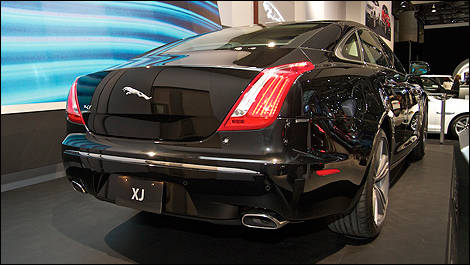 |
| Photo: Michael Wong |
Auto123: Would you consider Canadian-specific models?
Duffield: Most automakers have a North-American spec and a rest of the world spec, so it’s difficult for any Canadian manufacturer to bring in a uniquely Canadian model, unless you’re a very high-volume player.
As we move forward we will be voicing what we would like in Canada. We might want to have different standard equipment, different engines, or something like four-wheel drive. While I can’t promise unique models for Canada, we can make sure they are spec’d and priced right for Canada.
Auto123: What has characterized Tata’s stewardship of the brands so far?
Duffield: I can answer that question by pointing to our management. Carl-Peter Forester (Tata Motors’ managing director and Group CEO) is very strong. He came to us after heading up GM’s European operations. Ralf Speth (CEO of Jaguar Land Rover) is considered a product architecture guru. We have two well-respected people in the industry.
My take is these guys would not have joined the company if they didn’t feel they would have the resources to do what needs to be done, to revitalize the brand globally. And that Tata would hire that caliber of executive shows its commitment to really make the company a true global player. We’ve said publicly we want to get back, in a relatively short period of time, to 300,000 units, which was the peak in 2007 before the meltdown.
Let’s face it; there have been a lot of distractions in the last few years, since Tata bought Jaguar Land Rover. The meltdown. A recession. Credit issues. The business has come back much stronger than ever anticipated, but is still challenging in many markets.
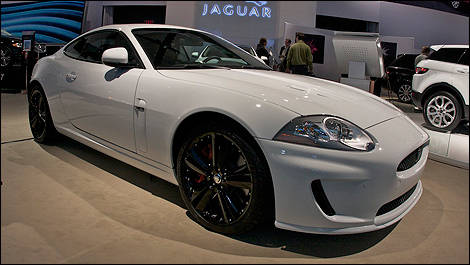 |
| Photo: Michael Wong |