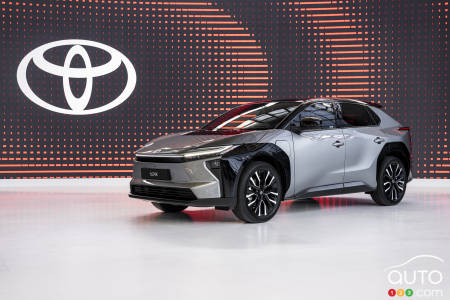



Toyota, long cautious in its transition to all-electric, looks set to pick up the pace. According to Japanese daily Nikkei, the auto giant aims to launch 15 electric vehicle (EV) models by 2027, all developed internally.
A million EVs annually by 2027
This strategic shift is part of an ambitious production target: reaching one million units per year by 2027.
Toyota has not officially confirmed what Nikkei is reporting.
A global expansion strategy to reduce risks
To date, Toyota offers five internally designed EV models, all produced solely in Japan and China. But that should soon change.
The manufacturer is now considering expanding production to the U.S., Thailand and Argentina. That strategy is designed to reduce risks related to exchange rates and customs duties, while improving delivery times.
Among the 15 upcoming models, several will be marketed under the premium Lexus banner, Nikkei adds.

Recall that Toyota initially set a target of selling 1.5 million EVs per year by 2026, with a target of 3.5 million units by 2030. Those figures are now presented as benchmarks for shareholders, not firm targets.
According to Nikkei, the estimated production for 2026 is now set at 800,000 units, a reduction of nearly 50 percent compared to the initial plan.
Growth still modest, but increasing
In 2024, Toyota sold around 140,000 electric vehicles worldwide, an increase of 33 percent compared to the previous year. That’s a big jump, but to put it in perspective, that represents less than 2 percent of the more than 10 million vehicles sold globally by the manufacturer last year.
Electrification: Slow but steady
This shift towards electric, even if it seems late compared to competitors like Tesla or BYD, marks a key step for Toyota. The approach remains cautious, but the announcement of 15 new models by 2027 demonstrates that the Japanese giant intends to catch up, while relying on its formidable industrial efficiency.