


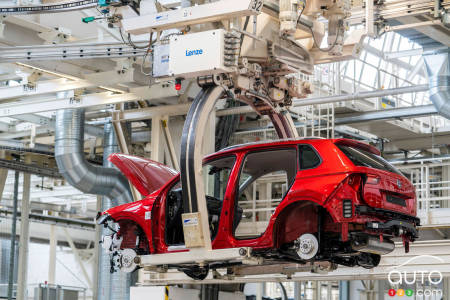



Faced with steep sales declines in China and mounting financial headwinds, the Volkswagen Group has unveiled a ruthless restructuring strategy. The German automotive giant’s Executive Board announced a sweeping plan that calls for gradually eliminating up to 50 percent of its global model portfolio by 2030. That would mark one of the most aggressive consolidation efforts in automotive history.
In tandem with the model cuts, VW plans to aggressively slash configuration complexity. The number of equipment packages, trim levels and powertrain options will be gutted by up to 75 percent. The goal is to eradicate costly “parallel structures” where overlapping vehicles across VW’s 10 distinct brands compete for the same buyers.
Squeezed by a changing market
The dramatic pivot comes as the Group grapples with a harsh economic climate. Global deliveries have plateaued, and second-quarter sales plummeted 8.6 percent globally. That sales drop was driven in good part by a 33 percent plunge in China, where nimbler domestic EV competitors are out-innovating the legacy automaker.
“We must instead fundamentally realign our business model and achieve structural, sustainable improvements,” stated CFO Arno Antlitz, noting that previous cost-saving measures are no longer sufficient.
To weather the storm, CEO Oliver Blume said the company is shrinking production capacity to target a more resilient 9 million vehicles annually. However, scaling back means immense friction; sources indicate the company is weighing up to 100,000 job cuts and the unprecedented closure of four German manufacturing plants.
What models are at risk?
While the official announcement did not explicitly name the nameplates on the chopping block, high-volume cash cows like the VW Golf, Tiguan, and Porsche 911 are entirely safe. Instead, the axe will fall on niche spinoffs and regional duplicates, likely skewed to markets other than the North American one.
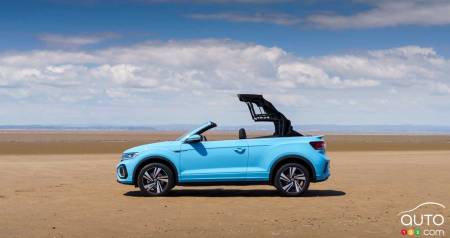
• Volkswagen and Audi: More-obscure variants like the T-Roc Cabriolet and the ID.5 coupe-SUV are unlikely to survive. Audi has already dropped its entry-level A1 and Q2 models to streamline production.
• Seat and Cupra: The overlapping Spanish brands face consolidation, with the cheaper Seat brand likely seeing its role significantly reduced as VW prioritizes the more profitable, sportier Cupra lineup.
• Porsche: Even luxury lines face optimization; the Taycan and Panamera sedans could eventually merge into a singular model line to reduce development bloat.
While North American buyers will likely only see a reduction in minor trim options, the massive cull will fundamentally reshape the automotive landscapes of Europe and China as VW fights to become a leaner, faster competitor.