


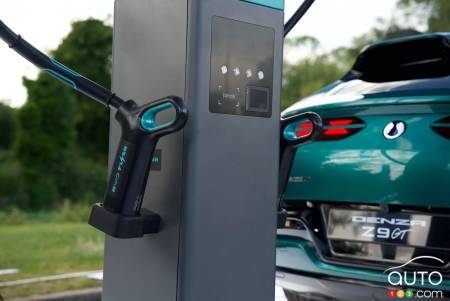



The landscape of Canada electric vehicle infrastructure is on the verge of a new evolution. Chinese automaker BYD is laying the groundwork to deploy its advanced “Flash Charging” network across the Great White North.
The plan marks Canada as BYD’s first strategic foothold in North America, and it comes in the wake the recent trade agreement between Ottawa and Beijing, which allows up to 49,000 Chinese-built EVs into Canada annually at a standard tariff of just 6.1 percent.
News of BYD’s plans came not through an official announcement, but via a Toronto-based LinkedIn job posting for a “Flash Charging Business Development Manager,” tasked with steering the national expansion alongside a launch team that is already planning 20 Canadian dealerships. That bit of intel was picked up by the Elektrek outlet.
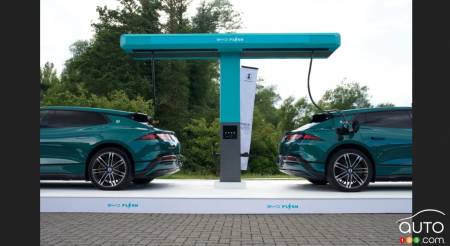
Flash chargers
BYD’s headline claim for its second-generation, Blade-battery-powered Flash Chargers is an astonishing output of up to 1,500 kW. That dwarfs North America’s current infrastructure, where public fast chargers typically cap out between 350 kW and 500 kW.
Under optimal conditions, BYD’s system can recharge a vehicle’s battery from 10 to 70 percent in a mere five minutes, adding roughly 400 km of range.
Crucially for the Canadian market, the technology is uniquely engineered to conquer brutal sub-zero winters, which continues to be a obstacle to gaining wider EV adoption here. BYD's internal testing revealed that even when frozen at -30°C, a vehicle could charge from 20 to 97 percent in just 12 minutes. If that holds true in real-world use, BYD’s chargers would set a shole new standard for wintertime EV charging in Canada.
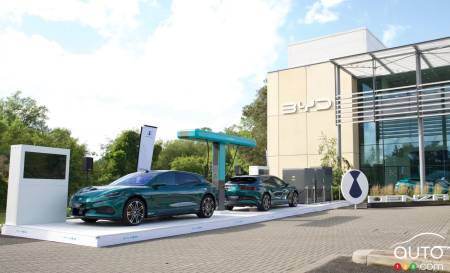
Energy storage solutions
Deploying megawatt-level charging requires an immense amount of energy, which could easily overwhelm local power grids. BYD thus plans to integrate high-capacity energy storage systems directly into the stations. These setups act as massive intermediate power banks, absorbing electricity gradually from the grid and discharging it rapidly into vehicles without triggering severe local consumption spikes.
Current import quotas and infrastructure logistics mean consumers likely won’t see the first Flash Charging dispensers until well into 2027. Still, by investing early in a proprietary, ultra-fast charging network, BYD is making clear it has closely studied the playbook Tesla used when installing its Supercharger network of stations a decade ago.