





Three Seconds is All You Need to Avoid an Accident
With all the new electronic gizmos modern cars come equipped with, it's no wonder more and more drivers find themselves
caught in precarious situations, eyes half focused on the road ahead and partially absorbed in the management of a complicated infotainment interface, it's only a matter of time before an accident takes place.
Maybe some of the new safety features, such as multiple frontal, side-impact, side-curtain and front-knee airbags, plus ABS-equipped brakes with electronic brake force distribution and brake assist systems that apply the appropriate amount of braking pressure in reaction to the driver's reaction speed, electronic stability control to pull a wayward driver back on course, pre-crash systems to pull reclined seats back into a safer upright position while closing windows and the sunroof automatically, cruise
control systems that keep track of vehicles ahead, radar sensing systems that watch out for vehicles to the sides, and the list goes on, put some drivers into a lull of complacency. Either way, a recent study finds that 8 out of 10 accidents occur because motorists aren't paying full attention to the road ahead.
According to the $4.2 million USD study, released Thursday, April 20, in which analysts from the Virginia Tech Transportation Institute researched the driving patterns of 241 drivers, ranging from 18 to 73 years of age, were monitored over 13 months over a total of 42,000 hours in the northern Virginia and Washington, D.C. areas, via five cameras positioned inside and outside the vehicles, onboard computers, radar, global positioning systems in order to monitor driving behaviour, a number of regular activities increased the opportunity for accident.
"We're spending a lot more time in our cars commuting, and we're doing a lot more in cars, especially with new technologies," stated Charlie Klauer, a principal researcher and author of the study. "We do a lot of things and we don't get caught. But in fact we're just lucky and we get complacent."
Number one on the list is the act of reaching for a moving object, such as swatting a fly
or reaching down to the floor to pick up a rolling cell phone or coffee mug, 9 times more likely to cause an accident or near accident. Look at an object reduced the likelihood of an accident to a 3.7 times greater chance than paying full attention to driving, while applying makeup increased the rate of accident by 3 times, the same rate as the simple act of dialing a cell phone number. Interestingly, talking on a cell phone while driving showed no increase in the rate of accidents or near crashes, which would infer that if you pull over to dial the number and then proceed driving while on the phone you'd reduce your chance of accident significantly. Nevertheless, at least three U.S. states and the District of Columbia have banned the use of cell phones without a hands-free device while driving. No such bans are regulated in Canada, although police in some jurisdictions have the right to charge a cell phone using driver if they notice erratic driving behaviour.
With all the new electronic gizmos modern cars come equipped with, it's no wonder more and more drivers find themselves
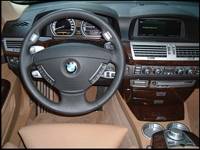 |
| Do high-tech features save drivers from accidents or cause more due todriver distraction? (Photo: Rob Rothwell, Canadian Auto Press) |
Maybe some of the new safety features, such as multiple frontal, side-impact, side-curtain and front-knee airbags, plus ABS-equipped brakes with electronic brake force distribution and brake assist systems that apply the appropriate amount of braking pressure in reaction to the driver's reaction speed, electronic stability control to pull a wayward driver back on course, pre-crash systems to pull reclined seats back into a safer upright position while closing windows and the sunroof automatically, cruise
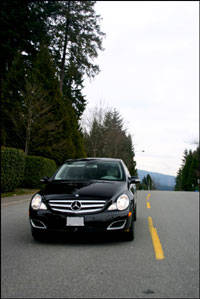 |
| Many top-line vehicles offer active and passive safety features allowing for much greater potential for accident avoidance or survival. (Photo: Trevor Hofmann, Canadian Auto Press) |
According to the $4.2 million USD study, released Thursday, April 20, in which analysts from the Virginia Tech Transportation Institute researched the driving patterns of 241 drivers, ranging from 18 to 73 years of age, were monitored over 13 months over a total of 42,000 hours in the northern Virginia and Washington, D.C. areas, via five cameras positioned inside and outside the vehicles, onboard computers, radar, global positioning systems in order to monitor driving behaviour, a number of regular activities increased the opportunity for accident.
"We're spending a lot more time in our cars commuting, and we're doing a lot more in cars, especially with new technologies," stated Charlie Klauer, a principal researcher and author of the study. "We do a lot of things and we don't get caught. But in fact we're just lucky and we get complacent."
Number one on the list is the act of reaching for a moving object, such as swatting a fly
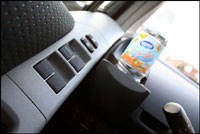 |
| Those who swat flies or reach to pick up rolling cell phones or coffeemugs are 9 times more likely to cause an accident or near accident,although those distracted by slotting a CD of Radiohead's Killer Cars into the audio system oreating are also a danger. (Photo: Justin Couture, Canadian Auto Press)<br> |