





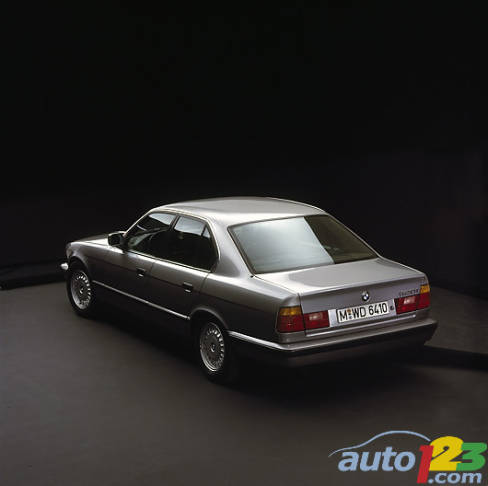
A new BMW M5 was also introduced at an early point, with engine output of 315 hp further increased to 340 hp in 1992.
The two eight-cylinder BMW 530i and BMW 540i followed in 1992, with the BMW 518i being introduced in 1993 as the entry-level model with a four-cylinder power unit. In the meantime, the six-cylinder engines, benefiting from four-valve technology and variable Vanos camshaft management, had gained even greater power, torque and efficiency.
1995: the fourth generation –
for the first time with light-alloy suspension.
The fourth generation of the BMW 5 Series made its debut at the 1995 Frankfurt Motor Show, offering an evolutionary development through its design of the former model with its sporting and elegant style. A particular feature at the front was the dual round headlights behind a glass cover, with the light rings for the positioning and daytime driving lights so typical of BMW being added in the year 2000.
Both the sedan and the Touring introduced in 1997 once again offered even more space within the passenger compartment. Boasting features such as a multifunction steering wheel, a navigation system, active seats and Dynamic Stability Control, the BMW 5 Series was acknowledged as a particularly outstanding high-tech representative of its segment.
2003: the fifth-generation BMW 5 Series – progressive and efficient.
From the start, the fifth generation of the BMW 5 Series introduced in 2003 stood out through its impressive design and innovative technology. Once again, both the sedan and the Touring launched in 2004 set new standards in terms of active safety, driver assistance systems, and efficiency. BMW’s typical design language with convex and concave surfaces as well as flowing transitions from the front and side to the rear gave the fifth edition of the BMW 5 Series a particularly characteristic note, the interior with its clear-cut functions highlighting above all the iDrive control system featured as standard.
Engines with an aluminium or, respectively, a composite aluminium/magnesium crankcase as well as the lightweight aluminium front section of the car ensured a particularly good balance of weight front-to-rear. Another important component newly developed at the time was the integral rear axle likewise made of aluminium
The two eight-cylinder BMW 530i and BMW 540i followed in 1992, with the BMW 518i being introduced in 1993 as the entry-level model with a four-cylinder power unit. In the meantime, the six-cylinder engines, benefiting from four-valve technology and variable Vanos camshaft management, had gained even greater power, torque and efficiency.
1995: the fourth generation –
for the first time with light-alloy suspension.
The fourth generation of the BMW 5 Series made its debut at the 1995 Frankfurt Motor Show, offering an evolutionary development through its design of the former model with its sporting and elegant style. A particular feature at the front was the dual round headlights behind a glass cover, with the light rings for the positioning and daytime driving lights so typical of BMW being added in the year 2000.
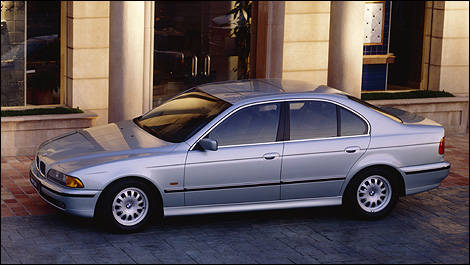 |
| BMW 528i - 4th generation(Photo: BMW) |
Both the sedan and the Touring introduced in 1997 once again offered even more space within the passenger compartment. Boasting features such as a multifunction steering wheel, a navigation system, active seats and Dynamic Stability Control, the BMW 5 Series was acknowledged as a particularly outstanding high-tech representative of its segment.
2003: the fifth-generation BMW 5 Series – progressive and efficient.
From the start, the fifth generation of the BMW 5 Series introduced in 2003 stood out through its impressive design and innovative technology. Once again, both the sedan and the Touring launched in 2004 set new standards in terms of active safety, driver assistance systems, and efficiency. BMW’s typical design language with convex and concave surfaces as well as flowing transitions from the front and side to the rear gave the fifth edition of the BMW 5 Series a particularly characteristic note, the interior with its clear-cut functions highlighting above all the iDrive control system featured as standard.
Engines with an aluminium or, respectively, a composite aluminium/magnesium crankcase as well as the lightweight aluminium front section of the car ensured a particularly good balance of weight front-to-rear. Another important component newly developed at the time was the integral rear axle likewise made of aluminium
Article Gallery