


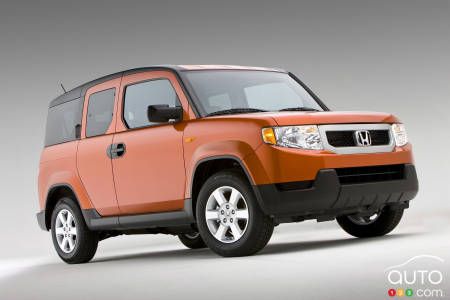



Automakers have long leaned into nostalgia when planning new products, and it’s a trend that has picked up pace in recent years. Here’s another case of it: According to Automotive News, which cites sources “in the know”, Honda plans to bring back the toaster-shaped Honda Element in 2029.
This time, however, the company intends to fix what was a major drawback with the previous Element. No more poor fuel economy, in other words, as the plan is to give the reborn model an all-new hybrid powertrain.
Production is reportedly scheduled to begin in the second quarter of 2029 at a central Ohio assembly plant, which will serve as the model’s exclusive global manufacturing hub. Honda is allegedly targeting an ambitious volume of nearly 100,000 units during the vehicle's first full year on the market.
Predictably, Honda executives have declined to comment on future product speculations. And that mid-2029 timeline is a long way off, giving plenty of time for things to change in the minds of Honda’s decision-makers. That’s been known to happen in recent years…
Filling a gap
If the reports hold true, the revived Element will slot between the subcompact HR-V and compact CR-V in Honda’s lineup. This will allow Honda to compete in the lucrative adventure-oriented utility segment without overlapping with the family-centric CR-V.
Reports of the Element making a return have been around for a while, and with reason: consumers in both Canada and the U.S. have for years now been flocking to crossovers that blend daily practicality with rugged, outdoor styling. Rivals like the Ford Bronco Sport and Hyundai Santa Fe have proven that a boxy, adventure-ready aesthetic is a safe sales driver.
Likewise with hybrid powertrains, currently the system of choice for many buyers. And the Element would seem a natural choice to go hybrid.
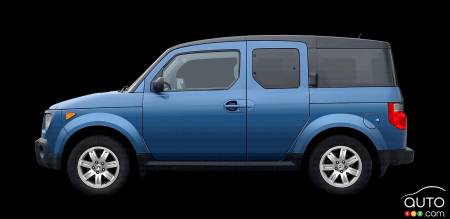
The original Element was offered in Canada from 2003 to 2010, hanging on for one more model-year in the U.S. before heading off into the sunset after 2011. And arguably, it was a model ahead of its time. Marketed toward youth, its washable floors, flexible seating and rear-hinged side doors instead won over outdoor enthusiasts and dog owners. While sales peaked at over 67,000 U.S. deliveries in 2003, by 2011 that figures had plummeted to just 11,534 units. Despite this, it maintained a fierce cult following, and used Elements still command high resale values.

Addressing past flaws
A next-generation hybrid setup would fix the original model's primary drawback: lackluster fuel efficiency. Rumours suggest the Element could use a new-generation hybrid system Honda is developing for 2027, which promises to be 30 percent less costly to manufacture than those in use in the current Civic and CR-V. The cost reduction should ensure the adventure-themed utility remains affordable and help it deliver the kind of fuel economy current rivals do.