





A Brief History
Before all this went down the Ford-controlled company needed to go through a metamorphosis, starting at its Hiroshima, Japan
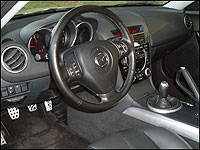 |
| Mazda's rise from the brink wasn't easy, it involved cutting back the salaried workforce by 20 percent, reducing the salaries of those still employed, and scuttling a quarter of the automaker's manufacturing capacity. (Photo: Rob Rothwell, Canadian Auto Press) |
At the time, Mazda's then President Mark Fields, the architect of the turnaround plan, stated, "We are starting to see real progress. We have passion and focus and a unified vision." Incidentally, Fields left in
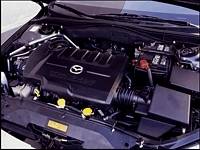 |
| One of two engines lies under the hood of the 6, either a Mazda-designed 2.3-liter inline 4-cylinder or the Ford-designed 3.0-liter 24-valve DOHC V6. (Photo: Mazda Canada) |
Not to get derailed, part of that vision was to incorporate more Ford components into Mazda's new models. While the Tribute is little more than a mildly stylized Escape inside and out, the 6 appears on the outside to be a completely unique car. Under the skin, however, lies one of two engines, either a Mazda-designed 2.3-liter inline 4-cylinder, a sophisticated little 16-valve, dual-overhead cam mill that also finds its way into the Focus, or the Ford-designed 3.0-liter 24-valve DOHC V6, also used in various stages of tune for everything from the pragmatic Taurus to soul-stirring Jaguars. Obviously the availability of such engines drove down development costs, and pushed up profits.