
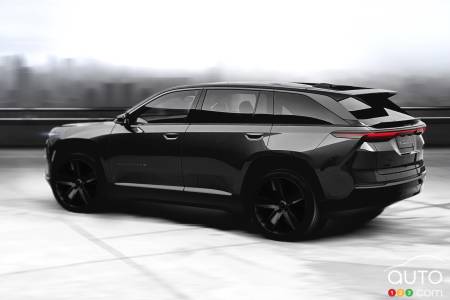
Stellantis has confirmed that the Jeep Wagoneer S will skip the 2026 model year in North America. The all-electric SUV, which served as Jeep’s high-stakes entry into the battery-electric segment, is being “paused” as the automaker recalibrates its production pacing and prepares for a more advanced 2027 relaunch.
Pacing production
Stellantis’ decision to bypass 2026 is described internally as a strategy to “pace production.” While corporate language often masks underlying challenges, there’s little mystery here when you look at the numbers: sales of high-priced EVs have hit a significant wall in North America.
In the U.S., Jeep did sell over 10,000 units of the Wagoneer S in its first eight months. But momentum evaporated once federal tax credits ended last fall; since then, Jeep has moved fewer than 1,000 of the EV. In Canada? The model never did as well here, selling for only 690 units last year, but this year has seen sales crater to just 29 in the first quarter of 2026.
Tariffs and the incentive gap
The Wagoneer S faces a unique set of economic hurdles. Assembled at the Toluca plant in Mexico, the vehicle is subject to shifting trade dynamics and import tariffs that complicate its pricing structure in Canada
Furthermore, the model remains out of reach for many Canadian buyers looking for government support. Under Ottawa’s newly revived Electric Vehicle Affordability Program (EVAP) — the $5,000 incentive formerly known as the iZEV — vehicles must have a transaction price below $50,000 to qualify. With the 2025 Wagoneer S Limited starting at $85,790 in Canada, it sits firmly in the luxury bracket, ineligible for the rebate.
A high-tech reset for 2027
Jeep insists it isn't abandoning the Wagoneer S. Rather, it’s using the hiatus to implement critical upgrades. The promised 2027 model is slated to feature improved battery performance, software refinements, and, most importantly, native compatibility with the North American Charging Standard (NACS). This will grant future owners access to Tesla’s extensive Supercharger network.
In the meantime, Jeep will focus on selling down its existing 2025 inventory. With roughly 350 units currently sitting on Canadian and U.S. dealer lots and sales at a slow trickle, Stellantis believes the current supply will comfortably bridge the gap, which is a nice way to spin things.