





Mercedes-Benz intends to add an additional model to the production schedule at its plant in Tuscaloosa, Alabama. All indications are it could be the GLC.
Without officially confirming whether this is a response to U.S. tariffs on imported vehicles and parts, the company emphasizes that it will be a “core segment” model intended for the North American market. However, its production there won’t begin before 2027.

A well-established plant... focused on exports
The Tuscaloosa plant, in operation since 1997, currently produces the GLE and GLS, as well as the electric EQE and EQS SUVs. It assembles around 260,000 vehicles per year, and nearly 60 percent of them are destined for export.
The facility, which counts around 6,000 employees, once hosted production of the C-Class, which has since been relocated. Originally, the plant was built to manufacture the very first ML, an iconic vehicle in Mercedes' shift towards SUVs.
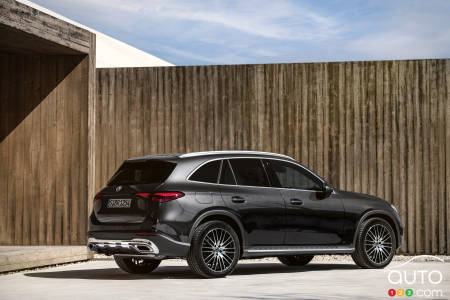
The GLC the likely choice
Mercedes hasn’t yet confirmed which model will be added at Tuscaloosa, but there is a logical candidate. In 2024, the GLC was the second best-selling Mercedes model in the U.S., just behind the GLE.
Due to the 25-percent tariff now imposed on imported vehicles, several manufacturers are re-evaluating their manufacturing strategies. Some are increasing their prices, others are suspending imports or relocating production.
More domestic production, but not necessarily new jobs
According to details provided to CNBC, Mercedes is adopting a “local-for-local” strategy, in other words building in the market where the vehicle will be sold. This could signify a transfer of production (for example, of the GLC or the C-Class) to the United States, but not necessarily an increase in production or jobs created.
It’s also possible the automaker will reduce current exports of GLE and GLS models to free up production capacity at the Alabama plant, which will also help it circumvent import tariffs imposed in other regions such as Canada, Europe and China.
Still very limited North American content
They might be assembled in the U.S., but Mercedes’ SUVs produced in Tuscaloosa contain barely 10 percent of parts of American origin, according to NHTSA documents. The engine still comes from Germany, the transmission from Romania. Those crucial parts will be hit by the new tariffs on automotive components.
Mercedes-Benz produces a wide variety of models intended for the U.S. market in its plants in Germany, but also in Austria, Hungary, South Africa and Mexico. As for the Sprinter van, it’s assembled in a separate plant in South Carolina.