





The strength of the yen has become a cause for concern for the Japanese manufacturers, who are trying by any means possible to avoid a financial impasse without affecting their weakened position following the earthquake and tsunami last spring.
Nissan’s vice president Hiroto Saikawa announced last weekend that the automaker would be focusing less on exports (currently less profitable) and more on domestic sales in Japan, and would be assembling products from other manufacturers like Mitsubishi.
The news doesn’t necessarily entail a decrease in production, however. In fact, the number of vehicles built and sold in Japan would rise from 460,000 to 600,000, representing a 19% drop in exports.
In 2010, around 4 million cars, minivans, SUVs and pickups rolled off the assembly lines of the second largest Japanese automaker (after Toyota), 1 million of which were built in the Land of the Rising Sun.
Source: The Truth About Cars
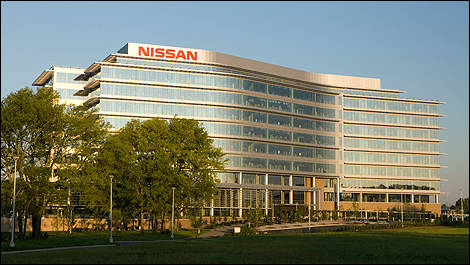 |
| Photo: Nissan |
Nissan’s vice president Hiroto Saikawa announced last weekend that the automaker would be focusing less on exports (currently less profitable) and more on domestic sales in Japan, and would be assembling products from other manufacturers like Mitsubishi.
The news doesn’t necessarily entail a decrease in production, however. In fact, the number of vehicles built and sold in Japan would rise from 460,000 to 600,000, representing a 19% drop in exports.
In 2010, around 4 million cars, minivans, SUVs and pickups rolled off the assembly lines of the second largest Japanese automaker (after Toyota), 1 million of which were built in the Land of the Rising Sun.
Source: The Truth About Cars